Ballentine Place Historic District

Why it's listed
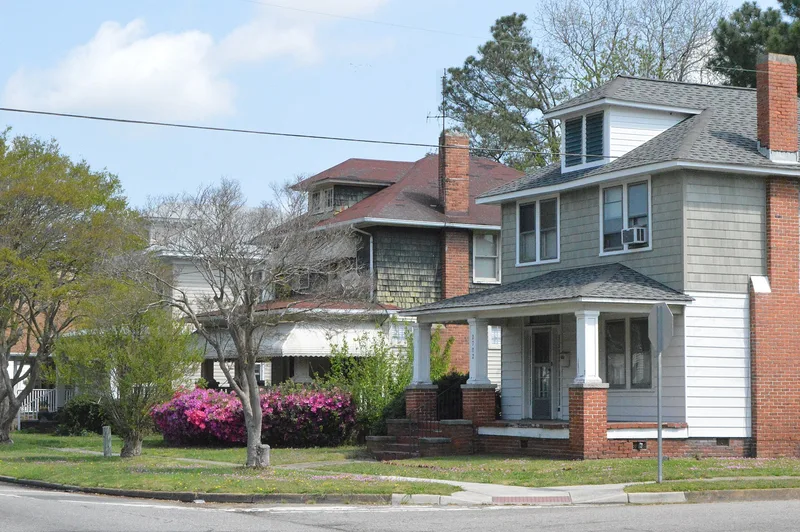
Ballentine Place is a residential neighborhood near the center of Norfolk, Virginia, laid out in 1909 by the Ballentine Realty Corporation on land that had been a truck farm. The plan used a regular grid of long, narrow blocks, tree-lined streets, sidewalks and a three-block central open space. In the 1930s the Works Progress Administration added a park with a lake and planted crepe myrtles along the streets. Only a few dozen houses stood before 1915, but demand for housing during World War I brought a surge of middle- and working-class residents, and hundreds of buildings followed through 1953. The district now holds 649 properties, including 616 single dwellings, 26 multiple dwellings, four churches, a school and one commercial building. Bungalow/Craftsman and Colonial Revival houses dominate, alongside Queen Anne, Tudor Revival, Dutch Colonial Revival, Cape Cod and kit houses. The 1915-1916 Ballentine School, a Classical Revival building, anchors the central park.
Machine-generated summary. This summary was generated by a language model from the official nomination document and has not been reviewed line by line by an editor. It may contain errors. Check the source document before relying on any detail. Source: nomination document (PDF) · catalog entry. Generated October 2026 (model claude-sonnet-5-5, prompt v1.0-2026-10-29).
| Styles | Late Victorian (Queen Anne, Italianate); Colonial Revival; Bungalow/Craftsman; Modern Movement; Commercial |
|---|---|
| Areas of significance | Architecture, Community Planning and Development, Landscape Architecture, Politics/Government |
| Acreage | 145 |
| Boundary source | NPS cultural-resource GIS polygon |
| Full listing page | Ballentine Place Historic District (property record) |
What listing means for this property
This is a historic district. Buildings within its boundary are either contributing (they add to the district's significance) or non-contributing. Owners of contributing income-producing buildings can claim the 20% federal rehabilitation tax credit; homeowners should look at state credits. National Register districts impose no design review by themselves; a local historic district ordinance, if one exists, does (the difference explained).
General information, not legal or tax advice. Rules change; confirm with your State Historic Preservation Office or a qualified adviser.