Ashland Historic District

Why it's listed
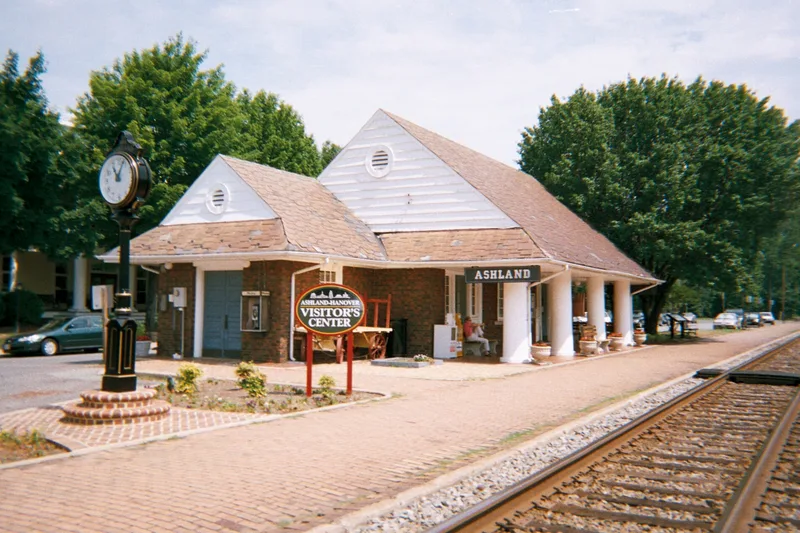
Ashland, about twelve miles north of Richmond, began as a small mid-19th-century summer resort, and its historic district preserves that heritage across roughly 159 acres and 250 structures. Center Street, with railroad tracks running down its middle, is the focal point, lined with large frame Italianate, Eastlake, Queen Anne, Second Empire and Colonial Revival houses on spacious, tree-shaded lots. Other clusters include Eastlake houses near Racecourse and St. James Streets, Georgian Revival homes on Caroline and College Avenues tied to Randolph-Macon College's growth in the 1920s, and churches in Gothic, Tudor and Colonial Revival designs. The downtown holds early 20th-century commercial buildings, many given false fronts later, and a Beaux Arts bank dated 1919. Modern parking lots, apartments and altered storefronts have affected parts of the town. Even so, the district shows continuous development and stands out for its abundance and quality of late 19th-century frame buildings.
Machine-generated summary. This summary was generated by a language model from the official nomination document and has not been reviewed line by line by an editor. It may contain errors. Check the source document before relying on any detail. Source: nomination document (PDF). Generated October 2026 (model claude-sonnet-5-5, prompt v1.0-2026-10-29).
| Styles | Late 19th- and early 20th-century residential styles: Queen Anne, Eastlake, Italianate, Second Empire, Colonial Revival, Georgian Revival, Craftsman, and Greek Revival |
|---|---|
| Areas of significance | Other, Transportation, Education, Architecture |
| Acreage | 159 |
| Boundary source | NPS cultural-resource GIS polygon |
| Full listing page | Ashland Historic District (property record) |
What listing means for this property
This is a historic district. Buildings within its boundary are either contributing (they add to the district's significance) or non-contributing. Owners of contributing income-producing buildings can claim the 20% federal rehabilitation tax credit; homeowners should look at state credits. National Register districts impose no design review by themselves; a local historic district ordinance, if one exists, does (the difference explained).
General information, not legal or tax advice. Rules change; confirm with your State Historic Preservation Office or a qualified adviser.