Arlington Forest Historic District

Why it's listed
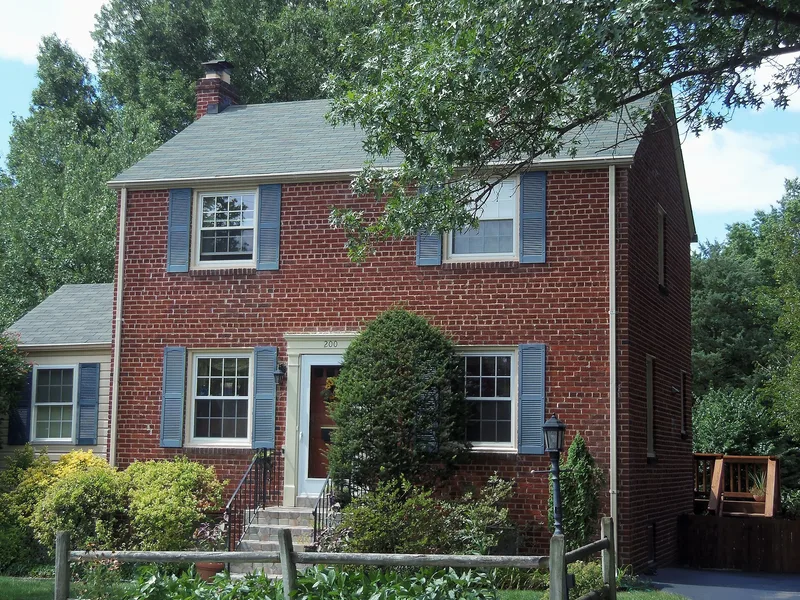
Arlington Forest is a planned neighborhood of brick, two-story, single-family houses in Arlington County, Virginia, built between 1939 and 1948. Meadowbrook Construction Company developed it in phases known as Southside, Northside and Greenbrier, with architect Robert O. Scholz designing six-room Colonial Revival houses. A final section, Broyhill's Addition, was added in 1948 by M.T. Broyhill & Sons with architect J. Raymond Mims. The design followed Federal Housing Administration guidance, which favored harmonious groups of homes without monotony. Scholz varied roof shapes, entrance and porch locations, brick colors and trim, so similar houses differ in detail. Curving, tree-lined streets, cul-de-sacs, three public parks and a neighborhood shopping center were part of the original concept. The district counts hundreds of contributing houses and outbuildings. It was listed as an example of mid-20th century suburban planning and of Colonial Revival housing built for the Washington, DC, area.
Machine-generated summary. This summary was generated by a language model from the official nomination document and has not been reviewed line by line by an editor. It may contain errors. Check the source document before relying on any detail. Source: nomination document (PDF) · catalog entry. Generated October 2026 (model claude-sonnet-5-5, prompt v1.0-2026-10-29).
| Period of significance | 1939-1948 |
|---|---|
| Styles | Late 19th & 20th Century Revivals/Colonial Revival |
| Areas of significance | Architecture, Communications |
| Acreage | 219.2 |
| Boundary source | NPS cultural-resource GIS polygon |
| Full listing page | Arlington Forest Historic District (property record) |
What listing means for this property
This is a historic district. Buildings within its boundary are either contributing (they add to the district's significance) or non-contributing. Owners of contributing income-producing buildings can claim the 20% federal rehabilitation tax credit; homeowners should look at state credits. National Register districts impose no design review by themselves; a local historic district ordinance, if one exists, does (the difference explained).
General information, not legal or tax advice. Rules change; confirm with your State Historic Preservation Office or a qualified adviser.