Albermarle and Chesapeake Canal Historic District

The National Park Service has not published a boundary polygon for this district; the map shows the listed properties inside it and the district's reference point.
Why it's listed
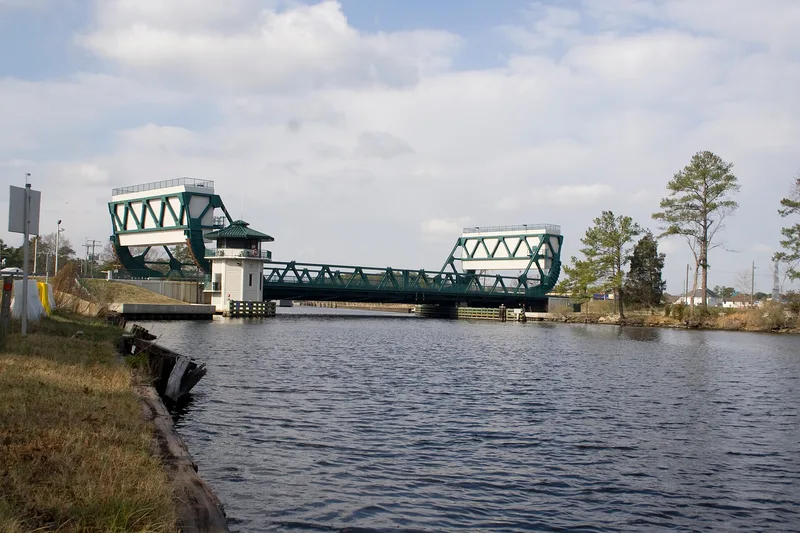
This linear district in Chesapeake, Virginia, follows the 9.1-mile Virginia Cut of the Albemarle & Chesapeake Canal, which links the Southern Branch of the Elizabeth River with the North Landing River. Dug between 1856 and 1859 under the canal company led by Marshall Parks, Jr., it was among the first canals designed for steam vessels, had no towpath, and was the first in Virginia built entirely by steam dredging. Its reversible tidal lock at Great Bridge was the largest of its kind on the East Coast. The federal government bought the canal in 1913 and folded it into the Atlantic Intracoastal Waterway. The Army Corps of Engineers widened it, built a maintenance reservation with eight contributing buildings dating from 1917 to 1948, and completed the present 600-foot lock in 1931-1932. The district also contains the site of the Battle of Great Bridge, fought in December 1775, the first Revolutionary War engagement in Virginia. Its period of significance runs from 1775 to 1953.
Machine-generated summary. This summary was generated by a language model from the official nomination document and has not been reviewed line by line by an editor. It may contain errors. Check the source document before relying on any detail. Source: nomination document (PDF) · catalog entry. Generated October 2026 (model claude-sonnet-5-5, prompt v1.0-2026-10-29).
| Period of significance | 1775-1953 |
|---|---|
| Areas of significance | Transportation, Military, Engineering |
| Acreage | 1704 |
| Boundary source | not published |
| Full listing page | Albermarle and Chesapeake Canal Historic District (property record) |
What listing means for this property
This is a historic district. Buildings within its boundary are either contributing (they add to the district's significance) or non-contributing. Owners of contributing income-producing buildings can claim the 20% federal rehabilitation tax credit; homeowners should look at state credits. National Register districts impose no design review by themselves; a local historic district ordinance, if one exists, does (the difference explained).
General information, not legal or tax advice. Rules change; confirm with your State Historic Preservation Office or a qualified adviser.