Texas Centennial Exposition Buildings (1936-1937)

Why it's listed
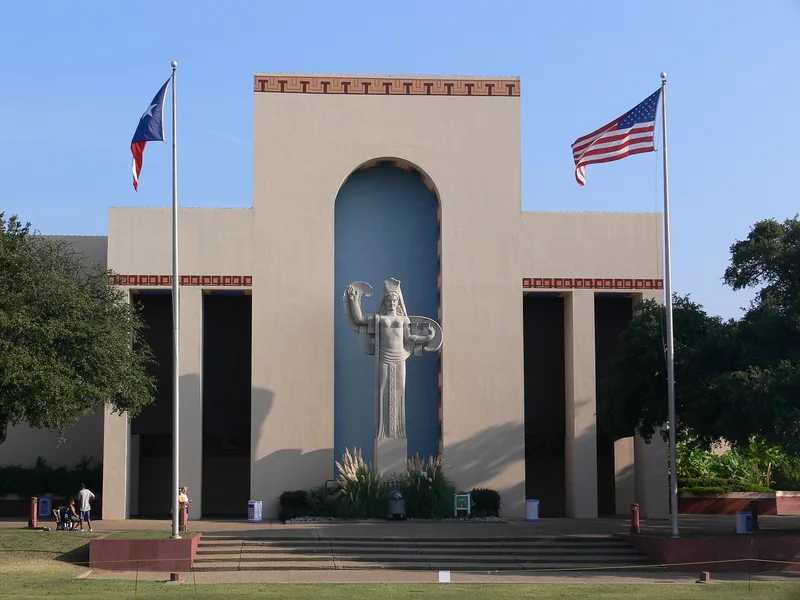
Fair Park in Dallas is a fairground that holds about 30 structures from the 1936 Texas Centennial Exposition and its 1937 successor, the Greater Texas Pan American Exposition. The site has hosted the State Fair since 1886, and several older fair buildings were remodeled in Art Deco style for the Centennial. The grounds follow two landscape themes: formal Beaux Arts plazas and vistas, and an informal pastoral layout around the Lagoon. Key features include the Esplanade of State with its 700-foot reflecting pool, the Hall of State with its sculpture and murals, the Tower Building, the Band Shell and several museums. The Margo Jones Theater, designed by William Lescaze, was the first International style building in Dallas. Fair Park was listed as one of the largest intact groupings of exposition buildings in the country, valued for its architecture, planning, open space design and public art. Some buildings have been altered, and several newer structures are considered intrusions.
Machine-generated summary. This summary was generated by a language model from the official nomination document and has not been reviewed line by line by an editor. It may contain errors. Check the source document before relying on any detail. Source: nomination document (PDF) · catalog entry. Generated October 2026 (model claude-sonnet-5-5, prompt v1.0-2026-10-29).
| Period of significance | 1936-37 |
|---|---|
| Styles | Art Deco, Moderne and International style exposition architecture |
| Areas of significance | Entertainment/Recreation |
| Acreage | 277 |
| Boundary source | NPS cultural-resource GIS polygon |
| Full listing page | Texas Centennial Exposition Buildings (1936-1937) (property record) |
What listing means for this property
This is a historic district. Buildings within its boundary are either contributing (they add to the district's significance) or non-contributing. Owners of contributing income-producing buildings can claim the 20% federal rehabilitation tax credit; homeowners should look at state credits. National Register districts impose no design review by themselves; a local historic district ordinance, if one exists, does (the difference explained).
General information, not legal or tax advice. Rules change; confirm with your State Historic Preservation Office or a qualified adviser.