Smithville Commercial Historic District

Why it's listed
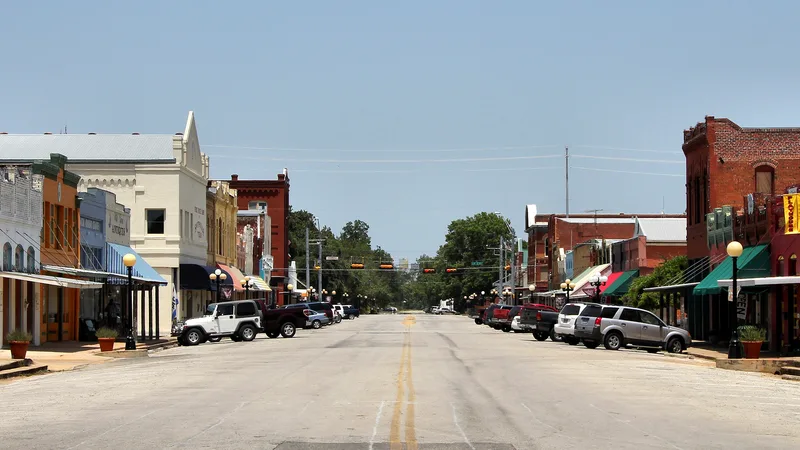
Smithville's commercial core is a compact group of about forty brick buildings, one to three stories tall, lining Main Street and parts of Second Street. Most date from the 1890s and early 1900s and share a common form: load-bearing brick walls, extended parapets with geometric brickwork, three-bay fronts, and a central entrance flanked by large display windows. Notable examples include the three-story Masonic Temple of 1902, the Rabb & McCollum Building of 1907, the Hill Building, and the McCaskill Building of 1897. The district grew out of the railroad's arrival in 1887 and the later Katy line connection, which made Smithville a division point. Population rose from 616 in 1890 to 2,577 in 1900, and twenty-two surviving buildings were erected by 1900. Later changes, such as stucco, new storefronts and replaced awnings, mostly affect street level, so the overall historic appearance remains largely intact.
Machine-generated summary. This summary was generated by a language model from the official nomination document and has not been reviewed line by line by an editor. It may contain errors. Check the source document before relying on any detail. Source: nomination document (PDF) · catalog entry. Generated October 2026 (model claude-sonnet-5-5, prompt v1.0-2026-10-29).
| Styles | Turn-of-the-century vernacular commercial architecture; late Victorian commercial |
|---|---|
| Areas of significance | Architecture, Commerce |
| Acreage | 6 |
| Boundary source | NPS cultural-resource GIS polygon |
| Full listing page | Smithville Commercial Historic District (property record) |
What listing means for this property
This is a historic district. Buildings within its boundary are either contributing (they add to the district's significance) or non-contributing. Owners of contributing income-producing buildings can claim the 20% federal rehabilitation tax credit; homeowners should look at state credits. National Register districts impose no design review by themselves; a local historic district ordinance, if one exists, does (the difference explained).
General information, not legal or tax advice. Rules change; confirm with your State Historic Preservation Office or a qualified adviser.