Shafter Historic Mining District

Why it's listed
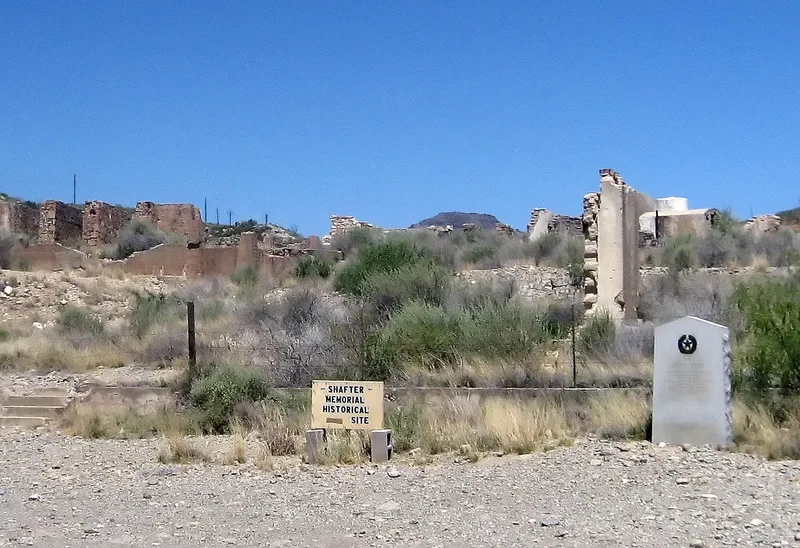
Shafter is a former silver mining town and smelter site on Cibolo Creek beside U.S. 67, about 20 miles north of Presidio in Presidio County, Texas. Silver was identified in the Chinati Mountains in the early 1880s, and Major William B. Shafter helped form the Presidio Mining Company. Over the decades the mines produced about $20,000,000 in silver and large quantities of lead, with about 300 employees at a time. The company provided a club house, hospital, boarding house and miners' housing. Residents built the surviving stone and adobe structures from native materials and salvaged mine timber. A National Guard and later Army camp operated here from 1916 to 1920 to guard against border raids. Mining ended in 1942. The district includes an adobe church, residences, ruins and smelter remains. It is considered the first major mining town in west Texas, and its partly occupied, undisturbed ruins hold archeological potential that has not yet been studied.
Machine-generated summary. This summary was generated by a language model from the official nomination document and has not been reviewed line by line by an editor. It may contain errors. Check the source document before relying on any detail. Source: nomination document (PDF) · catalog entry. Generated October 2026 (model claude-sonnet-5-5, prompt v1.0-2026-10-29).
| Period of significance | 1886-1920 |
|---|---|
| Areas of significance | Commerce |
| Acreage | 300 |
| Boundary source | NPS cultural-resource GIS polygon |
| Full listing page | Shafter Historic Mining District (property record) |
What listing means for this property
This is a historic district. Buildings within its boundary are either contributing (they add to the district's significance) or non-contributing. Owners of contributing income-producing buildings can claim the 20% federal rehabilitation tax credit; homeowners should look at state credits. National Register districts impose no design review by themselves; a local historic district ordinance, if one exists, does (the difference explained).
General information, not legal or tax advice. Rules change; confirm with your State Historic Preservation Office or a qualified adviser.