Shadow Lawn Historic District

Why it's listed
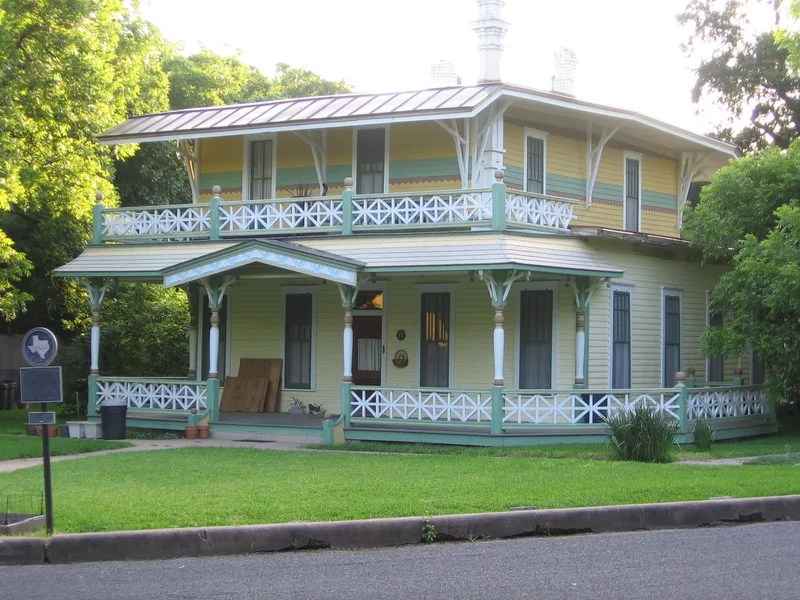
Shadow Lawn is a compact neighborhood of single-family houses in the southeast part of Austin's Hyde Park, covering the 3800 blocks of Avenue G, Avenue H and Duval Street. Developer Monroe M. Shipe platted the Shadow Lawn Addition in 1922, though building did not begin in earnest until the late 1920s, and the busiest years were the 1930s. Most of the historic houses are one-story brick-veneer dwellings with Tudor Revival features such as steep hipped and gabled roofs, half-timbering and round-arched doorways. Three are bungalows, including the 1926 Proctor House at 3810 Duval, designed by architect Roy L. Thomas and built by Frank Rundell. City directories show that professionals owned most of the early houses, and their choice of brick contrasted with the wood cladding common nearby. Of 41 resources, 25 contribute to the district's character. The area is notable for its cohesion and for having the densest concentration of Tudor Revival homes in Austin's northern suburbs.
Machine-generated summary. This summary was generated by a language model from the official nomination document and has not been reviewed line by line by an editor. It may contain errors. Check the source document before relying on any detail. Source: nomination document (PDF) · catalog entry. Generated October 2026 (model claude-sonnet-5-5, prompt v1.0-2026-10-29).
| Period of significance | 1922 - 1941 |
|---|---|
| Styles | Tudor Revival; Bungalow |
| Areas of significance | Architecture |
| Acreage | 8 |
| Boundary source | NPS cultural-resource GIS polygon |
| Full listing page | Shadow Lawn Historic District (property record) |
What listing means for this property
This is a historic district. Buildings within its boundary are either contributing (they add to the district's significance) or non-contributing. Owners of contributing income-producing buildings can claim the 20% federal rehabilitation tax credit; homeowners should look at state credits. National Register districts impose no design review by themselves; a local historic district ordinance, if one exists, does (the difference explained).
General information, not legal or tax advice. Rules change; confirm with your State Historic Preservation Office or a qualified adviser.