Rancho Estelle

Why it's listed
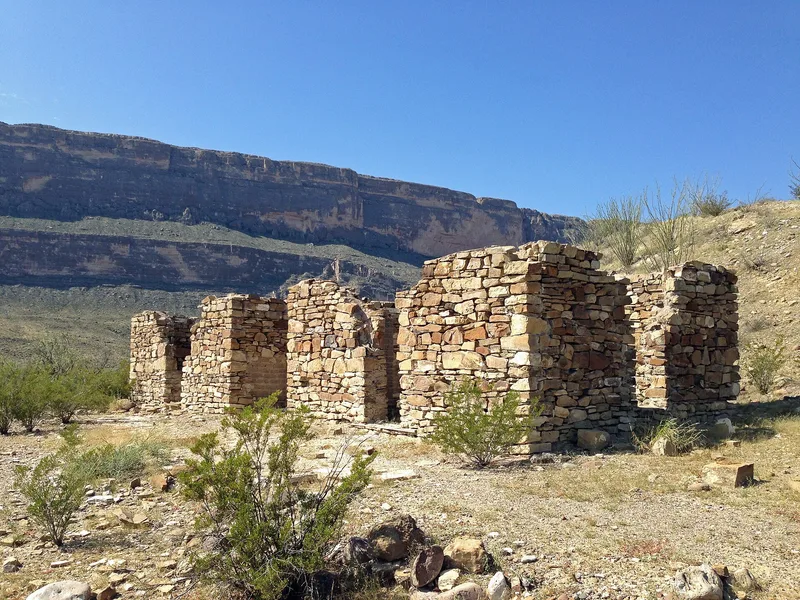
Rancho Estelle is a cluster of ruined farm buildings on the north side of Park Route 9 in Big Bend National Park, between Castalon and Santa Elena Canyon. James Sublett, an early large-scale farmer of the Rio Grande flood plain, bought four sections of land here and, as Grand Canyon Farms, he and his associates operated the farm. The surviving structures include an adobe farmhouse, a farm hand's casita, an adobe shed, a stone farmhouse that probably housed workers, and the Dorgan Residence. The Dorgan house is a one-story adobe and stone home with a large square main room, a two-way petrified wood fireplace serving as a structural pier, and log beams forming a nearly flat hipped roof. All of the buildings are roofless or deteriorating. The site was listed for its value in showing flood plain farming along the Rio Grande and for the architectural merit of the Dorgan house.
Machine-generated summary. This summary was generated by a language model from the official nomination document and has not been reviewed line by line by an editor. It may contain errors. Check the source document before relying on any detail. Source: nomination document (PDF) · catalog entry. Generated October 2026 (model claude-sonnet-5-5, prompt v1.0-2026-10-29).
| Period of significance | Early 1900's |
|---|---|
| Areas of significance | Agriculture, Architecture |
| Acreage | 135 |
| Boundary source | NPS cultural-resource GIS polygon |
| Full listing page | Rancho Estelle (property record) |
What listing means for this property
This is a historic district. Buildings within its boundary are either contributing (they add to the district's significance) or non-contributing. Owners of contributing income-producing buildings can claim the 20% federal rehabilitation tax credit; homeowners should look at state credits. National Register districts impose no design review by themselves; a local historic district ordinance, if one exists, does (the difference explained).
General information, not legal or tax advice. Rules change; confirm with your State Historic Preservation Office or a qualified adviser.