Perry Estate-St. Mary's Academy

Why it's listed
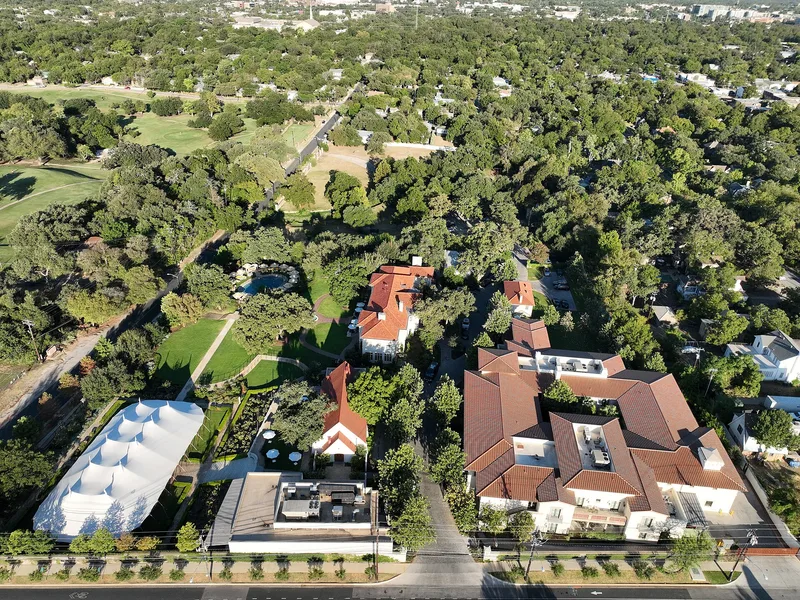
This 9.86-acre district in Austin's Hyde Park area combines a 1920s country estate with a mid-century school campus. Edgar Howard Perry, a prominent Austin businessman, developed the grounds, which include a two-story Italian Renaissance mansion completed in 1928, a garage apartment, a Jacobean Revival lodge, a bowling alley, a stone perimeter wall, a Roman-style bridge and formal gardens. Henry Bowers Thomson, a Texas architect based in Dallas, designed the mansion, which retains its original interior features such as an oval library, spiral walnut staircase and original kitchen fittings. From 1947 to 1950 the property housed St. Mary's Academy, a private school. Its classroom building, convent and Gothic Revival chapel contribute to the district, while the 1964 LaBelle Hall and a tennis court do not. The estate was recognized for its architecture, its landscape design and its role in local education.
Machine-generated summary. This summary was generated by a language model from the official nomination document and has not been reviewed line by line by an editor. It may contain errors. Check the source document before relying on any detail. Source: nomination document (PDF) · catalog entry. Generated October 2026 (model claude-sonnet-5-5, prompt v1.0-2026-10-29).
| Period of significance | 1917-1944 and 1947-1950 |
|---|---|
| Styles | Late 19th and 20th Century Revivals: Italian Renaissance; Gothic Revival; Modern Movement: International Style |
| Areas of significance | Education, Architecture, Landscape Architecture, Politics/Government |
| Acreage | 9.9 |
| Boundary source | NPS cultural-resource GIS polygon |
| Full listing page | Perry Estate-St. Mary's Academy (property record) |
What listing means for this property
This is a historic district. Buildings within its boundary are either contributing (they add to the district's significance) or non-contributing. Owners of contributing income-producing buildings can claim the 20% federal rehabilitation tax credit; homeowners should look at state credits. National Register districts impose no design review by themselves; a local historic district ordinance, if one exists, does (the difference explained).
General information, not legal or tax advice. Rules change; confirm with your State Historic Preservation Office or a qualified adviser.