Moore's Crossing Historic District

Why it's listed
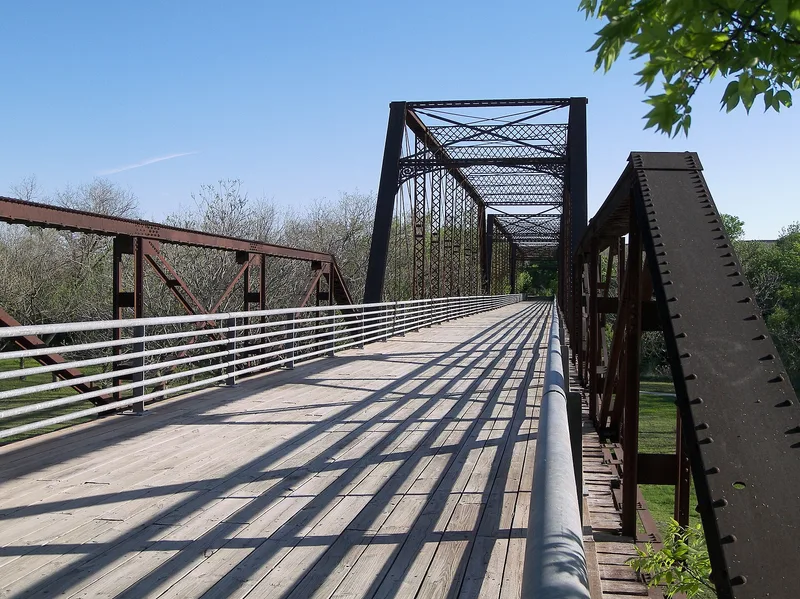
Moore's Crossing is a small rural community core in southeast Travis County, Texas, clustered beside a historic low-water ford on Onion Creek. The district covers about 10.83 acres and 21 resources, of which 13 contribute to its character. Most are modest one-story wood-frame vernacular buildings from the early 20th century. A country store built or rebuilt in 1914 serves as the focal point, along with an L-plan house of about 1893 showing Queen Anne influence and a metal-truss bridge. The bridge was reassembled from salvaged parts of the Congress Avenue Bridge over the Colorado River. The community grew slowly after the Civil War, serving nearby tenant and yeoman farms, and once had a school, cotton gin, blacksmith shops, a church and a meat market. Development was largely complete by the early 1920s. The district was listed because it keeps a rare cross-section of rural buildings, outbuildings, a ford and a bridge, while growth around Austin has erased similar settlements nearby.
Machine-generated summary. This summary was generated by a language model from the official nomination document and has not been reviewed line by line by an editor. It may contain errors. Check the source document before relying on any detail. Source: nomination document (PDF) · catalog entry. Generated October 2026 (model claude-sonnet-5-5, prompt v1.0-2026-10-29).
| Period of significance | Ends 1946 (start date not stated in the provided text) |
|---|---|
| Styles | Queen Anne; 1-part commercial block; barn; center passage; vernacular |
| Areas of significance | Communications, Commerce, Agriculture |
| Acreage | 10.8 |
| Boundary source | NPS cultural-resource GIS polygon |
| Full listing page | Moore's Crossing Historic District (property record) |
What listing means for this property
This is a historic district. Buildings within its boundary are either contributing (they add to the district's significance) or non-contributing. Owners of contributing income-producing buildings can claim the 20% federal rehabilitation tax credit; homeowners should look at state credits. National Register districts impose no design review by themselves; a local historic district ordinance, if one exists, does (the difference explained).
General information, not legal or tax advice. Rules change; confirm with your State Historic Preservation Office or a qualified adviser.