Miraflores Park

The National Park Service has not published a boundary polygon for this district; the map shows the listed properties inside it and the district's reference point.
Why it's listed
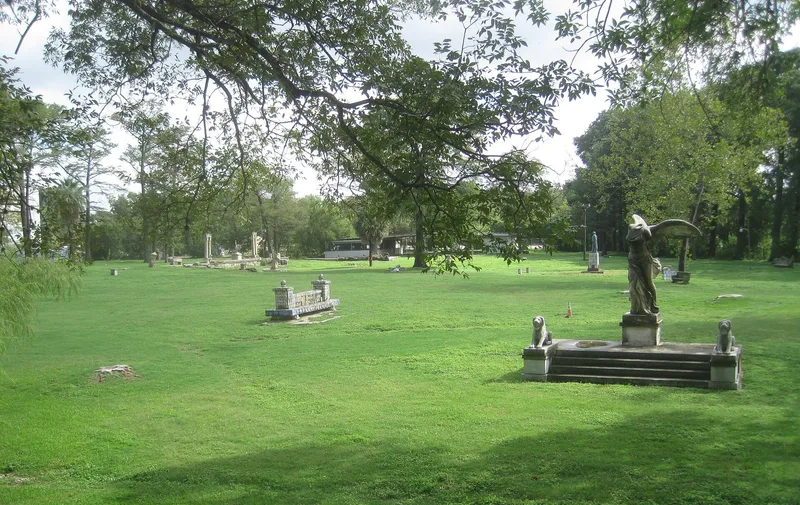
Miraflores Park is a 4.5-acre garden on Hildebrand Avenue in San Antonio, along the east bank of the San Antonio River. It is all that remains of a private park created in the 1920s for Dr. Aureliano Urrutia, a surgeon who left Mexico during the 1910 revolution. The grounds hold about 30 sculptures and garden objects, including tile-covered benches, urns, statues of Mexican historical figures, a small guest house called Quinta Maria built in 1923, and several concrete works by Dionicio Rodriguez. Rodriguez's pieces imitate wood and rock: a hollow-tree gate, a fallen-tree bench, a log stairway, a palapa-roofed bench and a stalactite grotto. Canals, pools and a large fountain once tied the garden together, but only their structures survive. The garden is considered significant as an early twentieth-century sculpture garden and as a showcase for Rodriguez's art and landscape design.
Machine-generated summary. This summary was generated by a language model from the official nomination document and has not been reviewed line by line by an editor. It may contain errors. Check the source document before relying on any detail. Source: nomination document (PDF) · catalog entry. Generated October 2026 (model claude-sonnet-5-5, prompt v1.0-2026-10-29).
| Period of significance | c.1926 |
|---|---|
| Styles | Other: Faux Bois Sculpture |
| Areas of significance | Art, Landscape Architecture |
| Acreage | 4.5 |
| Boundary source | not published |
| Full listing page | Miraflores Park (property record) |
What listing means for this property
This is a historic district. Buildings within its boundary are either contributing (they add to the district's significance) or non-contributing. Owners of contributing income-producing buildings can claim the 20% federal rehabilitation tax credit; homeowners should look at state credits. National Register districts impose no design review by themselves; a local historic district ordinance, if one exists, does (the difference explained).
General information, not legal or tax advice. Rules change; confirm with your State Historic Preservation Office or a qualified adviser.