Mills Place Historic District

Why it's listed
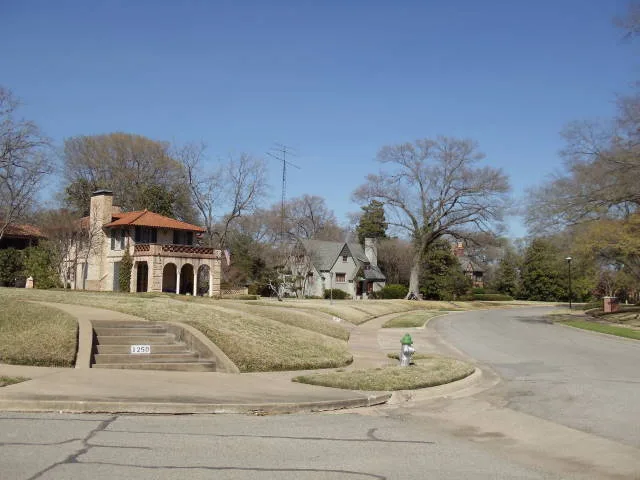
Mills Place Historic District is a compact residential enclave about six blocks west of the Navarro County Courthouse in Corsicana. It grew from the homestead tract of Roger Q. Mills, a Kentucky-born attorney who became a U.S. congressman and senator. His Greek Revival house, begun in the 1850s and enlarged in the 1880s, still stands. In 1924, developers J. Ruben Neece and J. Elmer Butler platted the Mills Place Addition, prompted by the housing demand of a regional oil boom. Curving streets, a cul-de-sac, large lots and a $10,000 minimum construction cost aimed the neighborhood at affluent buyers. Most houses date from the 1920s and 1930s and show Mediterranean, Tudor and Colonial Revival styles. Dallas architect David R. Williams and local architect H.O. Blanding designed several of them. By 1935 nearly every lot was built on. The district contains 32 contributing and 6 noncontributing buildings and keeps a high level of historic integrity.
Machine-generated summary. This summary was generated by a language model from the official nomination document and has not been reviewed line by line by an editor. It may contain errors. Check the source document before relying on any detail. Source: nomination document (PDF) · catalog entry. Generated October 2026 (model claude-sonnet-5-5, prompt v1.0-2026-10-29).
| Period of significance | 1924-1945 |
|---|---|
| Styles | Colonial Revival; Tudor Revival; Italian Renaissance; Craftsman/Bungalow |
| Areas of significance | Architecture, Community Planning and Development |
| Acreage | 20 |
| Boundary source | NPS cultural-resource GIS polygon |
| Full listing page | Mills Place Historic District (property record) |
What listing means for this property
This is a historic district. Buildings within its boundary are either contributing (they add to the district's significance) or non-contributing. Owners of contributing income-producing buildings can claim the 20% federal rehabilitation tax credit; homeowners should look at state credits. National Register districts impose no design review by themselves; a local historic district ordinance, if one exists, does (the difference explained).
General information, not legal or tax advice. Rules change; confirm with your State Historic Preservation Office or a qualified adviser.