McKinney Cotton Mill Historic District

Why it's listed
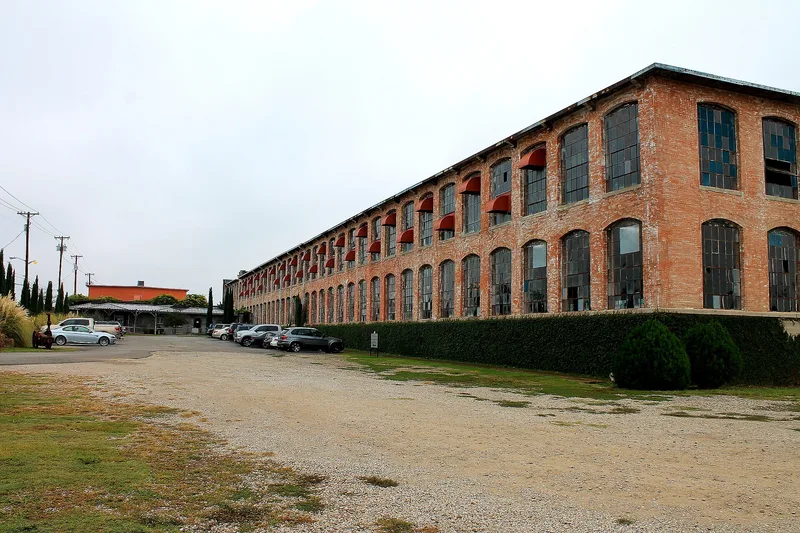
Mill Town, in southeastern McKinney, grew up around a cotton textile mill that opened on November 1, 1910. The district covers about 30 acres and holds the two-story brick mill, three warehouses, a two-story boarding house and roughly 70 contributing structures, mostly one-story frame workers' houses set close to the street in uniform rows. The first 17 cottages went up with the mill in 1910, and more followed in 1926 during a $200,000 expansion by contractor J. E. Cooper. Local business leaders, led by J. Perry Burrus, financed the mill, which grew to 376 looms by 1917 and employed more than 520 people. A 1948 tornado damaged it, and it closed in 1969, when a furniture maker took over the plant. The district is listed because few Texas textile mills were built, and almost no other mill-and-housing complex survives as intact. Many houses are dilapidated, and some lots stand empty.
Machine-generated summary. This summary was generated by a language model from the official nomination document and has not been reviewed line by line by an editor. It may contain errors. Check the source document before relying on any detail. Source: nomination document (PDF) · catalog entry. Generated October 2026 (model claude-sonnet-5-5, prompt v1.0-2026-10-29).
| Period of significance | 1900-1937 |
|---|---|
| Areas of significance | Industry, Community Planning and Development, Architecture |
| Acreage | 30 |
| Boundary source | NPS cultural-resource GIS polygon |
| Full listing page | McKinney Cotton Mill Historic District (property record) |
What listing means for this property
This is a historic district. Buildings within its boundary are either contributing (they add to the district's significance) or non-contributing. Owners of contributing income-producing buildings can claim the 20% federal rehabilitation tax credit; homeowners should look at state credits. National Register districts impose no design review by themselves; a local historic district ordinance, if one exists, does (the difference explained).
General information, not legal or tax advice. Rules change; confirm with your State Historic Preservation Office or a qualified adviser.