Llano County Courthouse Historic District

Why it's listed
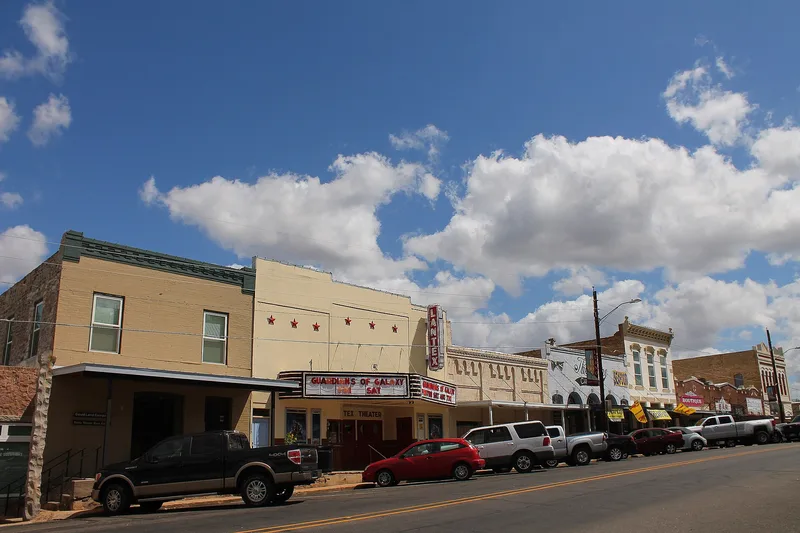
Downtown Llano, on the south bank of the Llano River in the Texas hill country, is preserved as a historic district of about 28 acres. It covers parts of nine city blocks around the 1893 county courthouse and its green square, with roughly 66 sites, 53 of them contributing. Most are one- and two-story commercial rows of stone or brick, built between about 1877 and 1939 and often showing Italianate detailing, with later Mission Revival and Moderne touches. Local sandstone and granite are used throughout, and concrete works at the river, including a 1908 dam, a 1918 power plant smokestack and a 1936 truss bridge, mark the northern edge. The town was platted in 1857 and grew as the county seat, then boomed between 1886 and 1893 with iron ore mining and the arrival of the railroad. After fires hit North Llano in 1893, the south-side square regained its place as the main business center. The district remains a nearly intact pre-World War II town center.
Machine-generated summary. This summary was generated by a language model from the official nomination document and has not been reviewed line by line by an editor. It may contain errors. Check the source document before relying on any detail. Source: nomination document (PDF) · catalog entry. Generated October 2026 (model claude-sonnet-5-5, prompt v1.0-2026-10-29).
| Period of significance | 1877-1938 |
|---|---|
| Styles | Vernacular commercial architecture with Italianate, Romanesque Revival, Second Empire, Mission Revival and Moderne influences |
| Areas of significance | Commerce, Art, Politics/Government, Architecture |
| Acreage | 28 |
| Boundary source | NPS cultural-resource GIS polygon |
| Full listing page | Llano County Courthouse Historic District (property record) |
What listing means for this property
This is a historic district. Buildings within its boundary are either contributing (they add to the district's significance) or non-contributing. Owners of contributing income-producing buildings can claim the 20% federal rehabilitation tax credit; homeowners should look at state credits. National Register districts impose no design review by themselves; a local historic district ordinance, if one exists, does (the difference explained).
General information, not legal or tax advice. Rules change; confirm with your State Historic Preservation Office or a qualified adviser.