Lawrence, Stephen Decatur, Farmstead

Why it's listed
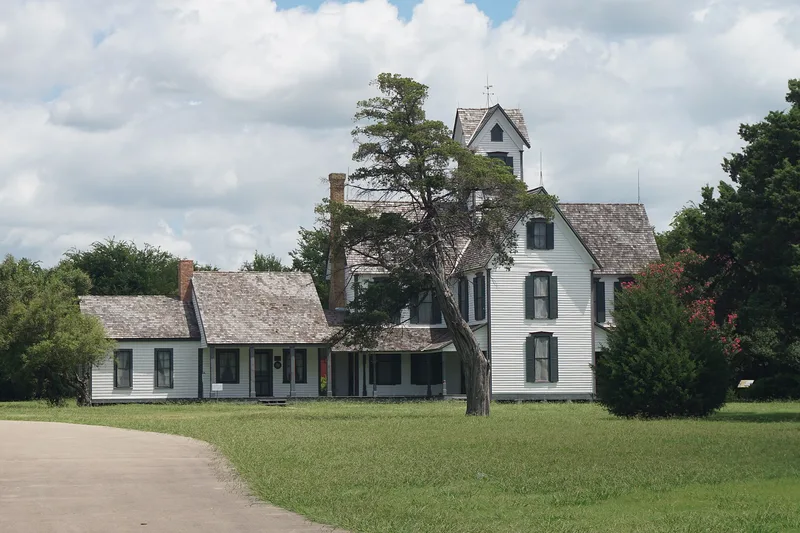
Established in 1874 on blackland prairie east of Dallas, this farmstead in Mesquite preserves about 13.7 acres of a once much larger Lawrence family holding. Stephen Decatur Lawrence received roughly 304 acres from his father in 1873, and the family's cotton farming grew after the railroad arrived in 1873. The complex includes a c. 1874 one-and-a-half-story dwelling and a larger frame house begun in 1882 and expanded in 1886 into a cross plan with a one-story belvedere. Local craftsmen, the Florrer family, are credited with building the main house and the large barn. Surrounding them are a horse barn, a smaller barn with smokehouse and root cellar, wells, a cistern, sheds and barbed-wire fencing. A cedar-lined entry alley and surviving garden plants add to the setting. The property is valued for showing how a pioneer farm family worked and lived, and how its buildings suited the North Texas climate. It now operates as a museum.
Machine-generated summary. This summary was generated by a language model from the official nomination document and has not been reviewed line by line by an editor. It may contain errors. Check the source document before relying on any detail. Source: nomination document (PDF) · catalog entry. Generated October 2026 (model claude-sonnet-5-5, prompt v1.0-2026-10-29).
| Period of significance | c. 1874 - 1949 |
|---|---|
| Styles | Vernacular Single-Pen; Vernacular Modified T-Plan |
| Areas of significance | Agriculture, Architecture |
| Acreage | 13.7 |
| Boundary source | NPS cultural-resource GIS polygon |
| Full listing page | Lawrence, Stephen Decatur, Farmstead (property record) |
What listing means for this property
This is a historic district. Buildings within its boundary are either contributing (they add to the district's significance) or non-contributing. Owners of contributing income-producing buildings can claim the 20% federal rehabilitation tax credit; homeowners should look at state credits. National Register districts impose no design review by themselves; a local historic district ordinance, if one exists, does (the difference explained).
General information, not legal or tax advice. Rules change; confirm with your State Historic Preservation Office or a qualified adviser.