Greenway Parks Historic District

Why it's listed
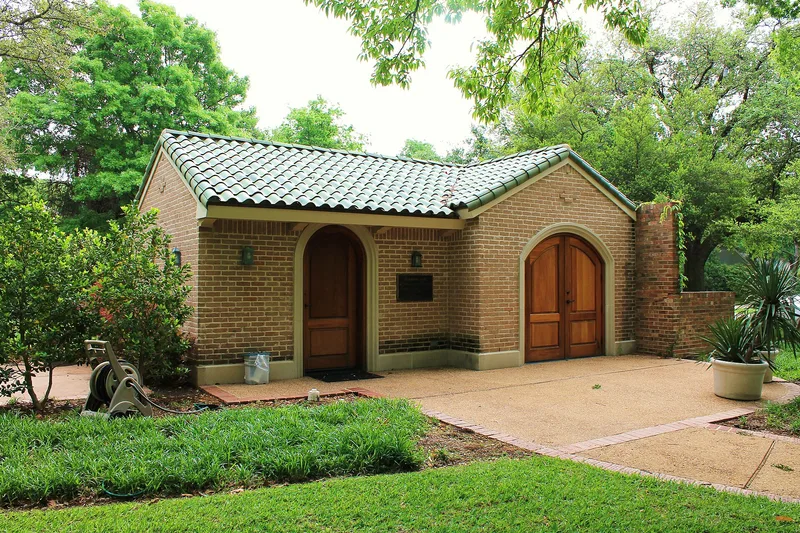
Greenway Parks is a 150-acre residential neighborhood about five miles northwest of downtown Dallas, laid out in 1927 by architect and engineer David R. Williams as one of the earliest garden-plan automobile suburbs in Texas. Its design called for double-fronted houses, with the more elaborate facade facing broad greenways, while garages and servants quarters were built into the street side, removing the need for alleys. More than 23 acres of parks and open space remain, and the greenways are intact. Original deed restrictions, many still in place, barred fencing and walls that would block greenway views. The district holds 292 houses, 215 of them contributing, built mostly after World War II. Colonial Revival is the most common style at 30 percent, followed by Ranch at 20 percent and Tudor Revival at 12 percent. It was listed for its planning, which integrated landscape more systematically than other Texas garden suburbs, and for the range of period revival and modern houses built through 1959.
Machine-generated summary. This summary was generated by a language model from the official nomination document and has not been reviewed line by line by an editor. It may contain errors. Check the source document before relying on any detail. Source: nomination document (PDF) · catalog entry. Generated October 2026 (model claude-sonnet-5-5, prompt v1.0-2026-10-29).
| Period of significance | 1927-1959 |
|---|---|
| Styles | Late 19th and 20th Century Revivals (Colonial Revival, Tudor Revival, French Renaissance, Mission/Spanish Colonial Revival, Monterey, Classical Revival, Italian Renaissance); Modern Movement: Ranch; Mid-Century Modern, Texas Regionalism, Minimal Traditional |
| Areas of significance | Community Planning and Development, Architecture |
| Acreage | 150 |
| Boundary source | NPS cultural-resource GIS polygon |
| Full listing page | Greenway Parks Historic District (property record) |
What listing means for this property
This is a historic district. Buildings within its boundary are either contributing (they add to the district's significance) or non-contributing. Owners of contributing income-producing buildings can claim the 20% federal rehabilitation tax credit; homeowners should look at state credits. National Register districts impose no design review by themselves; a local historic district ordinance, if one exists, does (the difference explained).
General information, not legal or tax advice. Rules change; confirm with your State Historic Preservation Office or a qualified adviser.