Goliad County Courthouse Historic District

Why it's listed
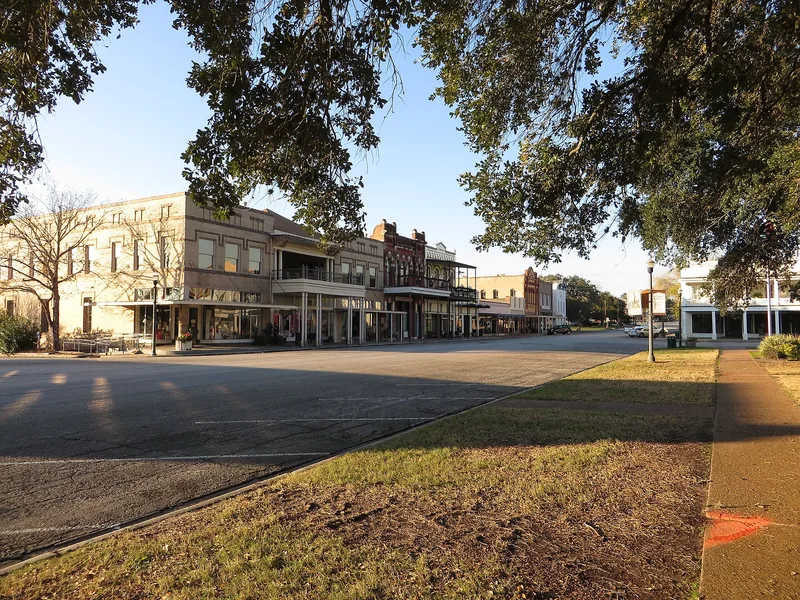
Goliad's courthouse square is a 19.5-acre district in the south-central part of the town, still the commercial and governmental center of the county seat. The focus is the county courthouse, completed in 1894 in rough-cut local limestone in the Second Empire style by the firm Martin, Byrnes, and Johnston, with a design reputed to be by Alfred Giles. A 1942 storm destroyed its dome and turrets, and a 1964 addition altered its balance. Around it stand one- and two-story brick, stone and wood buildings, including the 1871 Old Market House, the Cole-Block buildings, the 1896 Maetze Bank Building, the 1854 Masonic Lodge, and the Denham Hotel. Many have shopfronts below and living space above. Some ground floors have been modernized, yet the shared scale and materials keep the square cohesive. Few modern intrusions exist. The district also sits in a town tied to the Texas Revolution, the Goliad Declaration of Independence, and the 1836 Goliad Massacre.
Machine-generated summary. This summary was generated by a language model from the official nomination document and has not been reviewed line by line by an editor. It may contain errors. Check the source document before relying on any detail. Source: nomination document (PDF) · catalog entry. Generated October 2026 (model claude-sonnet-5-5, prompt v1.0-2026-10-29).
| Styles | Second Empire (courthouse); Victorian commercial buildings |
|---|---|
| Areas of significance | Politics/Government, Architecture, Social History |
| Acreage | 19.5 |
| Boundary source | NPS cultural-resource GIS polygon |
| Full listing page | Goliad County Courthouse Historic District (property record) |
What listing means for this property
This is a historic district. Buildings within its boundary are either contributing (they add to the district's significance) or non-contributing. Owners of contributing income-producing buildings can claim the 20% federal rehabilitation tax credit; homeowners should look at state credits. National Register districts impose no design review by themselves; a local historic district ordinance, if one exists, does (the difference explained).
General information, not legal or tax advice. Rules change; confirm with your State Historic Preservation Office or a qualified adviser.