Fort Sam Houston

Why it's listed
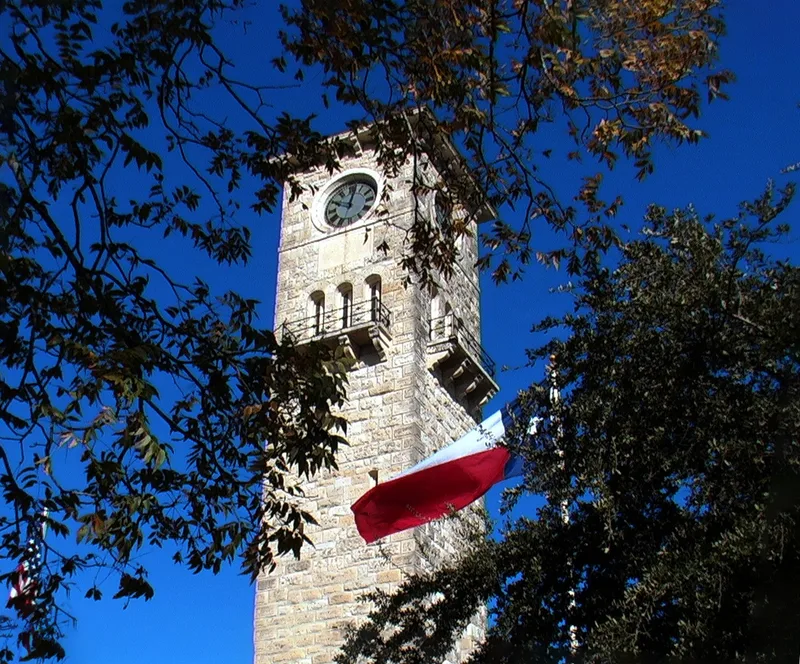
Fort Sam Houston is a military post on the northeastern edge of San Antonio, Texas. It began in 1876 on 40 acres with the Quadrangle, a limestone supply depot completed in 1879, and later grew to roughly 35,000 acres. The historic district centers on the Quadrangle and four groups of buildings added in the late 19th and early 20th centuries: the Staff Post, Infantry Post, Artillery Post and Cavalry Post. Limestone and brick officers' quarters, barracks, a 1909 chapel and a clock-faced watchtower survive in good condition, and many are still used. The post served as headquarters for the Department of Texas and later Army commands. It supplied the Rough Riders in 1898 and the 1916 campaign against Pancho Villa, trained troops in World War I, and was the site of Lt. Benny Foulois's early aerial experiments. Eisenhower lived in one set of quarters in 1941.
Machine-generated summary. This summary was generated by a language model from the official nomination document and has not been reviewed line by line by an editor. It may contain errors. Check the source document before relying on any detail. Source: nomination document (PDF) · catalog entry. Generated October 2026 (model claude-sonnet-5-5, prompt v1.0-2026-10-29).
| Period of significance | 1876 to present |
|---|---|
| Styles | Varied military styles; Italian Villa for the Staff Post quarters and Second Renaissance Revival for the Chapel |
| Areas of significance | Military |
| Acreage | 400 |
| Boundary source | NPS cultural-resource GIS polygon |
| Full listing page | Fort Sam Houston (property record) |
What listing means for this property
This is a historic district. Buildings within its boundary are either contributing (they add to the district's significance) or non-contributing. Owners of contributing income-producing buildings can claim the 20% federal rehabilitation tax credit; homeowners should look at state credits. National Register districts impose no design review by themselves; a local historic district ordinance, if one exists, does (the difference explained).
General information, not legal or tax advice. Rules change; confirm with your State Historic Preservation Office or a qualified adviser.