Ellis County Courthouse Historic District

Why it's listed
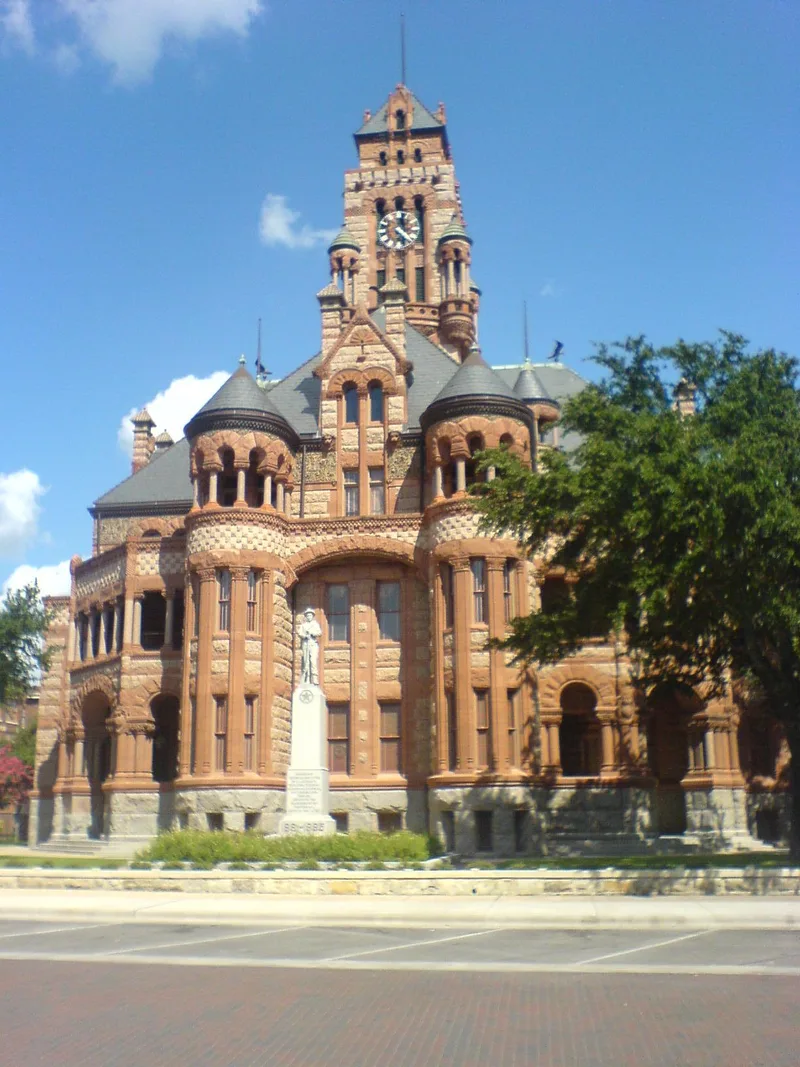
Waxahachie's downtown core, about 25 square blocks around the Ellis County Courthouse square, contains some fifty historic buildings and engineering structures built in the late nineteenth and early twentieth centuries. They reflect the years when cotton made the town prosperous enough to be called the "Queen City of the Cotton Belt." The centerpiece is the pink granite courthouse, designed by San Antonio architect J. Reilly Gordon and dedicated July 4, 1895, in Richardsonian Romanesque style. Around it stand Victorian storefronts with cast iron fronts and tin cornices, the 1889 Masonic Building, the 1912 Rogers Hotel, the Chateauesque second county jail, and the 1914 Neo-Classical Federal Building. Railroad depots, an 1889 wrought iron bridge, a concrete viaduct and a brick oil mill show the transportation and industry behind the cotton economy. The district was listed because it preserves this range of styles and an early twentieth century small-town character.
Machine-generated summary. This summary was generated by a language model from the official nomination document and has not been reviewed line by line by an editor. It may contain errors. Check the source document before relying on any detail. Source: nomination document (PDF) · catalog entry. Generated October 2026 (model claude-sonnet-5-5, prompt v1.0-2026-10-29).
| Period of significance | 1800-1899 (late nineteenth through early twentieth century; courthouse 1895) |
|---|---|
| Styles | Richardsonian Romanesque courthouse; also Romanesque Commercial, Victorian Commercial, High Victorian Italianate, Chateauesque, Neo-Classical Revival and Early Twentieth Century Commercial |
| Areas of significance | Industry, Commerce, Engineering, Transportation, Architecture |
| Acreage | 25 |
| Boundary source | NPS cultural-resource GIS polygon |
| Full listing page | Ellis County Courthouse Historic District (property record) |
What listing means for this property
This is a historic district. Buildings within its boundary are either contributing (they add to the district's significance) or non-contributing. Owners of contributing income-producing buildings can claim the 20% federal rehabilitation tax credit; homeowners should look at state credits. National Register districts impose no design review by themselves; a local historic district ordinance, if one exists, does (the difference explained).
General information, not legal or tax advice. Rules change; confirm with your State Historic Preservation Office or a qualified adviser.