Cuero Commercial Historic District

Why it's listed
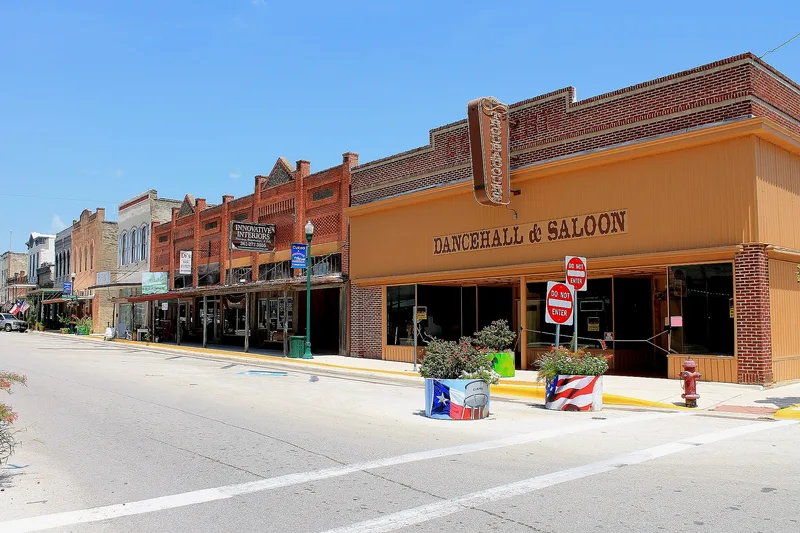
Downtown Cuero's commercial core, just north of the old railroad line, forms a district of about 21 acres along Main Street, Esplanade Boulevard and part of Church Street. Most of its one- and two-story masonry buildings, often of buff-colored brick, went up between the 1880s and the early twentieth century, replacing the wood-frame stores of the town's early years after its 1872 founding. Romanesque Revival is the dominant style, with round arches, corbeled brickwork and stepped parapets, alongside Italianate, Classical, Renaissance Revival and Mission Revival examples. Victoria architect Jules Leffland is credited with at least seven designs, and builders such as the McKnight Brothers and Robert Allert shaped other blocks. Landmarks include the 1915 Federal Building, the Buchel Bank and the H. Runge and Co. grocery buildings. Some storefronts were modernized after World War II, but upper floors largely survive, and recent restorations have followed. The district was recognized for its intact turn-of-the-century character and its long role as a regional banking and retail center.
Machine-generated summary. This summary was generated by a language model from the official nomination document and has not been reviewed line by line by an editor. It may contain errors. Check the source document before relying on any detail. Source: nomination document (PDF) · catalog entry. Generated October 2026 (model claude-sonnet-5-5, prompt v1.0-2026-10-29).
| Period of significance | 1873 to 1936 |
|---|---|
| Styles | Romanesque Revival dominant, with Classical, Renaissance Revival, Italianate and Mission Revival influences |
| Areas of significance | Commerce, Architecture |
| Acreage | 21 |
| Boundary source | NPS cultural-resource GIS polygon |
| Full listing page | Cuero Commercial Historic District (property record) |
What listing means for this property
This is a historic district. Buildings within its boundary are either contributing (they add to the district's significance) or non-contributing. Owners of contributing income-producing buildings can claim the 20% federal rehabilitation tax credit; homeowners should look at state credits. National Register districts impose no design review by themselves; a local historic district ordinance, if one exists, does (the difference explained).
General information, not legal or tax advice. Rules change; confirm with your State Historic Preservation Office or a qualified adviser.