Chamizal National Memorial

The National Park Service has not published a boundary polygon for this district; the map shows the listed properties inside it and the district's reference point.
Why it's listed
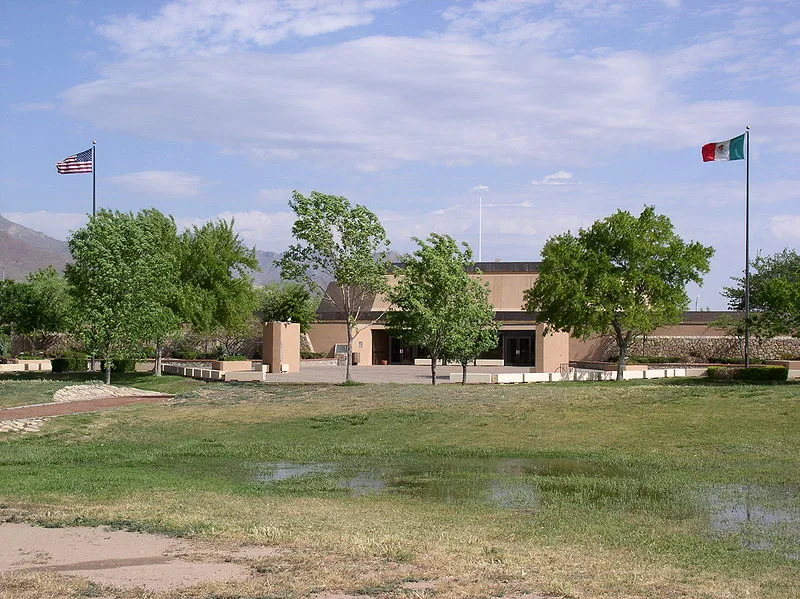
Chamizal National Memorial is a 54.9-acre park in midtown El Paso, Texas, built on land the United States acquired from Mexico in the 1963 Chamizal Settlement. Congress authorized it in 1966 to commemorate how the two nations peacefully worked through boundary problems dating from 1848, ending with the last major land disagreement between them. Plans went beyond commemoration to include an urban park and a center for cultural exchange, with a 500-seat theater, a 4,000-seat amphitheater, a museum, and programs in the graphic and performing arts. Landscaping was designed around native desert plants that need little water, and an environmental study area was proposed. By early 1973, construction from fiscal years 1968 to 1972 had provided utilities, 34 acres of grass, an automatic sprinkler system, roads and a visitor center. Rising costs left exhibits, seating and some landscaping unfunded, and a request was made to raise the development ceiling to $5,445,000. The available documents are mostly funding and staffing papers.
Machine-generated summary. This summary was generated by a language model from the official nomination document and has not been reviewed line by line by an editor. It may contain errors. Check the source document before relying on any detail. Source: nomination document (PDF) · catalog entry. Generated October 2026 (model claude-sonnet-5-5, prompt v1.0-2026-10-29).
| Areas of significance | Politics/Government |
|---|---|
| Acreage | 54.9 |
| Boundary source | not published |
| Full listing page | Chamizal National Memorial (property record) |
What listing means for this property
This is a historic district. Buildings within its boundary are either contributing (they add to the district's significance) or non-contributing. Owners of contributing income-producing buildings can claim the 20% federal rehabilitation tax credit; homeowners should look at state credits. National Register districts impose no design review by themselves; a local historic district ordinance, if one exists, does (the difference explained).
General information, not legal or tax advice. Rules change; confirm with your State Historic Preservation Office or a qualified adviser.