Butler Place Historic District

Why it's listed
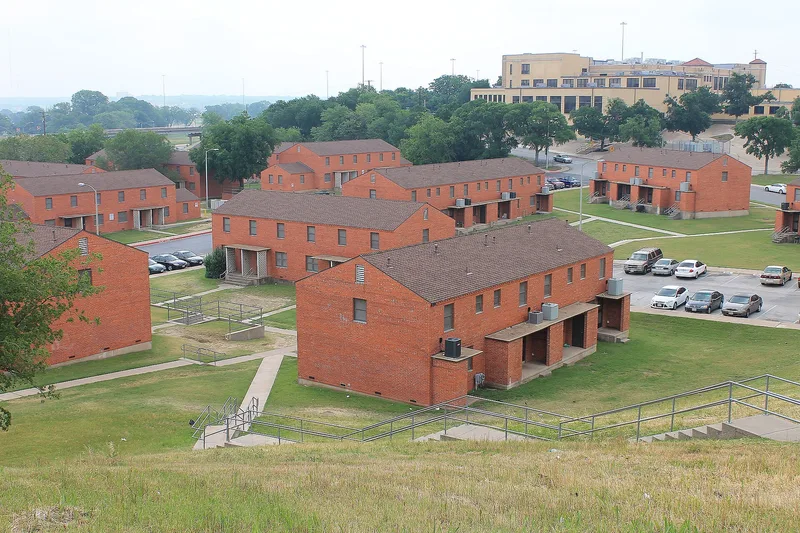
Butler Place is a public housing complex on twenty acres east of downtown Fort Worth, framed by three major highways. Built in 1939-40 with federal funding through the U.S. Housing Authority, it replaced a blighted area of substandard private dwellings and was designed to house 250 African-American families, along with a library and administrative space. The district holds twenty-two brick buildings and three small utility structures. Most residential buildings are six-, eight- or ten-unit designs in a stripped Colonial Revival style, with Moderne touches such as cast-concrete porch supports and contrasting dark brick bands. The buildings are arranged in U-shaped groupings with live oak trees and green courtyards. Wiley G. Clarkson led a group of well-known Texas architects, and nationally recognized Hare and Hare contributed landscape plans. Alterations are mostly interior, and the layout is largely intact apart from buildings lost to Interstate 35W. The complex still provides affordable housing.
Machine-generated summary. This summary was generated by a language model from the official nomination document and has not been reviewed line by line by an editor. It may contain errors. Check the source document before relying on any detail. Source: nomination document (PDF) · catalog entry. Generated October 2026 (model claude-sonnet-5-5, prompt v1.0-2026-10-29).
| Styles | Late 19th and Early 20th-Century Revivals: Colonial Revival; Modern Movement: Moderne |
|---|---|
| Areas of significance | Architecture, Social History, Politics/Government, Black |
| Acreage | 20 |
| Boundary source | NPS cultural-resource GIS polygon |
| Full listing page | Butler Place Historic District (property record) |
What listing means for this property
This is a historic district. Buildings within its boundary are either contributing (they add to the district's significance) or non-contributing. Owners of contributing income-producing buildings can claim the 20% federal rehabilitation tax credit; homeowners should look at state credits. National Register districts impose no design review by themselves; a local historic district ordinance, if one exists, does (the difference explained).
General information, not legal or tax advice. Rules change; confirm with your State Historic Preservation Office or a qualified adviser.