Broadacres Historic District

Why it's listed
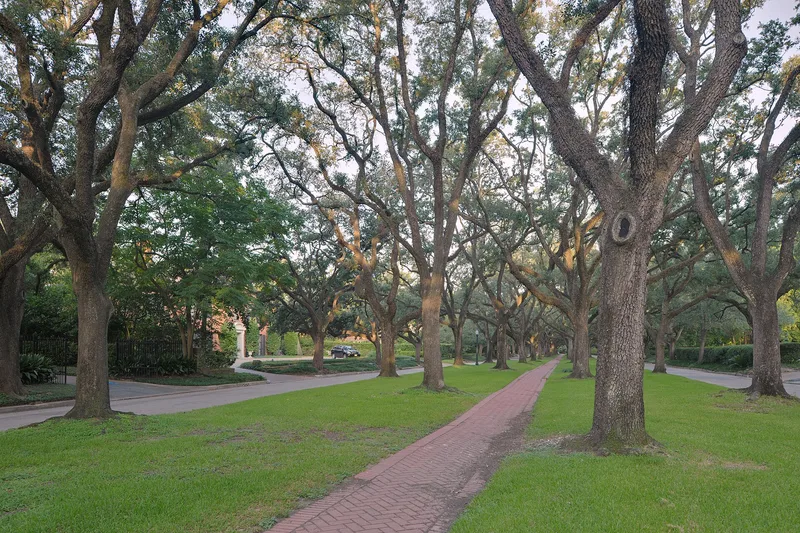
Broadacres is a 34-acre residential neighborhood in Houston's South End, near Rice University and Hermann Park. It was conceived in 1922 by attorney James A. Baker, Jr., and his father, Captain James A. Baker, who sold the tract in 1923 to eighteen initial lot owners. Deed restrictions set house orientation, set-back lines and a minimum construction cost, and utilities were buried in conduits. William Ward Watkin designed the entrance posts, park and esplanades. Twenty-six houses stand on the two boulevards, eighteen built between 1923 and 1930. Many were designed by Watkin, Birdsall P. Briscoe and John F. Staub in Georgian, Tudor, Spanish, French and Italian-inspired styles, kept restrained enough to give the street a cohesive look. Landscaping by Fleming & Sheppard and Ellen Shipman added gardens, and double rows of live oaks line the esplanades. Construction paused during the Depression and resumed from 1938 to 1953 with compatible, simpler houses. The district was recognized for its planning, landscape architecture and architecture.
Machine-generated summary. This summary was generated by a language model from the official nomination document and has not been reviewed line by line by an editor. It may contain errors. Check the source document before relying on any detail. Source: nomination document (PDF) · catalog entry. Generated October 2026 (model claude-sonnet-5-5, prompt v1.0-2026-10-29).
| Period of significance | 1900- |
|---|---|
| Styles | Eclectic domestic architecture (Georgian, English Tudor, Spanish-Mediterranean, French, Italian villa and colonial revival influences) |
| Areas of significance | Community Planning and Development, Landscape Architecture, Architecture |
| Acreage | 34.2 |
| Boundary source | NPS cultural-resource GIS polygon |
| Full listing page | Broadacres Historic District (property record) |
What listing means for this property
This is a historic district. Buildings within its boundary are either contributing (they add to the district's significance) or non-contributing. Owners of contributing income-producing buildings can claim the 20% federal rehabilitation tax credit; homeowners should look at state credits. National Register districts impose no design review by themselves; a local historic district ordinance, if one exists, does (the difference explained).
General information, not legal or tax advice. Rules change; confirm with your State Historic Preservation Office or a qualified adviser.