Bremond Block Historic District

Why it's listed
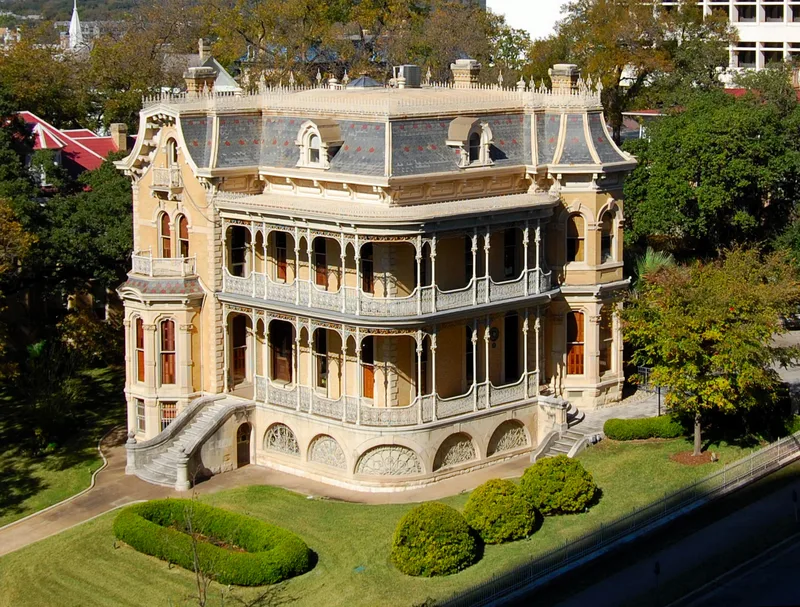
Large live oaks frame a group of nineteenth-century residences on a bluff a short walk from Congress Avenue in Austin. Known as the Bremond Block, the district covers one full block and three adjoining blocks. Its houses show a range of styles: one-story Greek Revival homes from the 1850s on Guadalupe Street, two-story limestone residences from 1872 with a mansard roof, a limestone chateau expanded into a late Victorian castle in 1894, a frame Victorian cottage, and a brick house of 1886 with a decorated mansard roof and wrought iron galleries, built by George Fiegel. Most were built or altered by members of the Bremond and Robinson families, prominent in Austin business and civic life after the Civil War. The nomination values the district as a largely intact record of Victorian architectural taste and of the society behind it. Nine of thirteen houses were designated Texas landmarks. In 1978 the boundary was reduced after one house was demolished and another moved.
Machine-generated summary. This summary was generated by a language model from the official nomination document and has not been reviewed line by line by an editor. It may contain errors. Check the source document before relying on any detail. Source: nomination document (PDF) · catalog entry. Generated October 2026 (model claude-sonnet-5-5, prompt v1.0-2026-10-29).
| Period of significance | 1850's-1898 |
|---|---|
| Styles | Victorian (Greek Revival, Second Empire/mansard, Romanesque, eclectic Victorian) |
| Areas of significance | Architecture |
| Acreage | 5 |
| Boundary source | NPS cultural-resource GIS polygon |
| Full listing page | Bremond Block Historic District (property record) |
What listing means for this property
This is a historic district. Buildings within its boundary are either contributing (they add to the district's significance) or non-contributing. Owners of contributing income-producing buildings can claim the 20% federal rehabilitation tax credit; homeowners should look at state credits. National Register districts impose no design review by themselves; a local historic district ordinance, if one exists, does (the difference explained).
General information, not legal or tax advice. Rules change; confirm with your State Historic Preservation Office or a qualified adviser.