Belford Historic District

Why it's listed
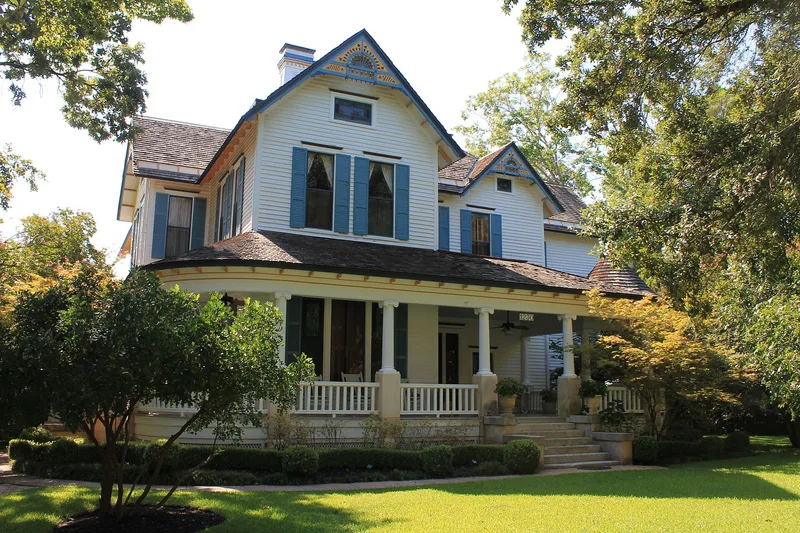
This residential neighborhood of about eight blocks in Georgetown, Texas, covers the 1200 and 1600-1900 blocks of Austin Avenue and Main Street, four blocks south of the county courthouse. It contains 81 structures, 70 of them contributing, and holds the city's largest collection of historic dwellings. Much of it was built by local lumberman Charles S. Belford, who came to Georgetown in 1884 and built up the Belford Lumber Co. The houses show his range, from his own 1896 Queen Anne home to Prairie School influenced residences and many bungalows. Older homes cluster in the 1200 blocks, while the 1600 to 1900 blocks were built mostly in the 1910s and 1920s with consistent setbacks and similar massing. The neighborhood housed prominent residents, including Mayor Marsh F. Smith and Judge Cooper Sansom. The district records how Georgetown's housing evolved from the 1870s to the 1930s, and how builders began erecting houses in groups much like later subdivisions.
Machine-generated summary. This summary was generated by a language model from the official nomination document and has not been reviewed line by line by an editor. It may contain errors. Check the source document before relying on any detail. Source: nomination document (PDF) · catalog entry. Generated October 2026 (model claude-sonnet-5-5, prompt v1.0-2026-10-29).
| Styles | Queen Anne, Italianate, Prairie School influenced, bungalow, L-plan vernacular and other early twentieth-century forms |
|---|---|
| Areas of significance | Architecture |
| Acreage | 29 |
| Boundary source | NPS cultural-resource GIS polygon |
| Full listing page | Belford Historic District (property record) |
What listing means for this property
This is a historic district. Buildings within its boundary are either contributing (they add to the district's significance) or non-contributing. Owners of contributing income-producing buildings can claim the 20% federal rehabilitation tax credit; homeowners should look at state credits. National Register districts impose no design review by themselves; a local historic district ordinance, if one exists, does (the difference explained).
General information, not legal or tax advice. Rules change; confirm with your State Historic Preservation Office or a qualified adviser.