Aransas Pass Light Station

Why it's listed
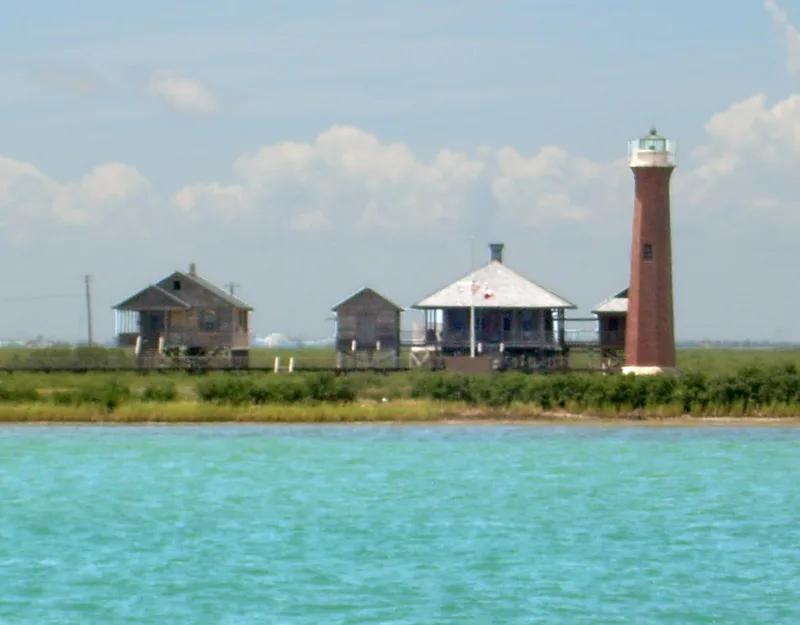
Aransas Pass Light Station occupies roughly 24 acres of low marsh on Harbor Island, beside the Lydia Ann Channel near Port Aransas, Texas. Completed in 1857 by the U.S. Lighthouse Board, it centers on an octagonal brick tower with a fourth-order Fresnel lens, and it grew to include tile-and-stucco and wood-frame keepers' dwellings, a radio room, raised plank walks, a T-head wharf and cypress cisterns. Hurricanes in 1916, 1919 and 1970 destroyed or damaged several structures, and Confederate soldiers blew the top off the tower in 1862; it was repaired and relit in 1867. The light guided shipping until 1952. The station is listed as the second oldest surviving lighthouse on the Texas coast, and it remains largely intact. Only the oil house and the radio beacon tower are gone. The tower and stairway were restored in 1972, and the buildings are in residential use today.
Machine-generated summary. This summary was generated by a language model from the official nomination document and has not been reviewed line by line by an editor. It may contain errors. Check the source document before relying on any detail. Source: nomination document (PDF) · catalog entry. Generated October 2026 (model claude-sonnet-5-5, prompt v1.0-2026-10-29).
| Period of significance | 1857 - 1952 |
|---|---|
| Areas of significance | Commerce, Engineering, Transportation |
| Acreage | 23.8 |
| Boundary source | NPS cultural-resource GIS polygon |
| Full listing page | Aransas Pass Light Station (property record) |
What listing means for this property
This is a historic district. Buildings within its boundary are either contributing (they add to the district's significance) or non-contributing. Owners of contributing income-producing buildings can claim the 20% federal rehabilitation tax credit; homeowners should look at state credits. National Register districts impose no design review by themselves; a local historic district ordinance, if one exists, does (the difference explained).
General information, not legal or tax advice. Rules change; confirm with your State Historic Preservation Office or a qualified adviser.