Womelsdorf Historic District

Why it's listed
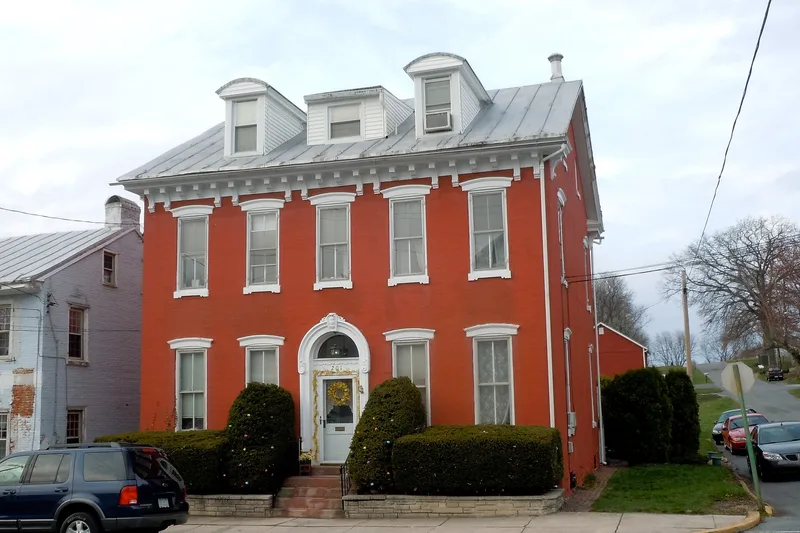
Womelsdorf is a small borough in a valley of western Berks County, with its core along High and Franklin Streets and an open Market Square at the centre. The town was laid out in 1762 by John Womelsdorff, who plotted 75 lots and required each owner to build a dwelling within three years. Its buildings range from log and stone houses to Victorian mansions, and many taverns, row houses and sidehall plan houses survive. Stouch's Tavern dates to about 1785, and the Seltzer House, built in 1800, was a tavern until 1937. Cigar manufacturing was the borough's largest industry, peaking between 1875 and 1930, and the A. S. Valentine & Son firm operated from 1848 to 1930. The district is listed for its architecture, which shows the town's development across more than a century, and for its role in early settlement and industry.
Machine-generated summary. This summary was generated by a language model from the official nomination document and has not been reviewed line by line by an editor. It may contain errors. Check the source document before relying on any detail. Source: nomination document (PDF) · catalog entry. Generated October 2026 (model claude-haiku-5-5, prompt v1.1-2026-10-29).
| Period of significance | 1700-1930 |
|---|---|
| Styles | Georgian, Italianate, Queen Anne, Victorian Gothic, Romanesque Revival, Eastlake and vernacular Georgian and Victorian styles |
| Areas of significance | Industry, Exploration/Settlement, Architecture |
| Acreage | 7052.3 |
| Boundary source | NPS cultural-resource GIS polygon |
| Full listing page | Womelsdorf Historic District (property record) |
What listing means for this property
This is a historic district. Buildings within its boundary are either contributing (they add to the district's significance) or non-contributing. Owners of contributing income-producing buildings can claim the 20% federal rehabilitation tax credit; homeowners should look at state credits. National Register districts impose no design review by themselves; a local historic district ordinance, if one exists, does (the difference explained).
General information, not legal or tax advice. Rules change; confirm with your State Historic Preservation Office or a qualified adviser.