Windom Mill Farm

Why it's listed
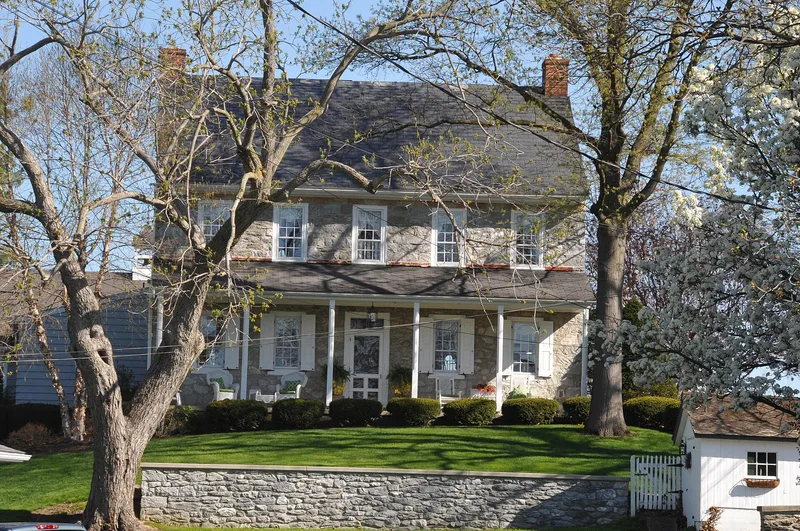
Limestone buildings on a 106-acre working farm beside Blue Rock Road west of Millersville make up this Lancaster County complex, centred on a farmhouse, a stone mill, a tavern, a miller's house and a bank barn. The land was patented to Samuel Herr in 1769, and in 1810 his son-in-law Jacob Kauffman is recorded as having had the large stone flour and feed mill built, with the tavern built at about the same time as a stop for Conestoga wagons on the road to the Susquehanna River. The farmhouse is dated by tradition to about 1780 but is judged stylistically closer to the Federal period, with a five-bay plan, nine-over-six windows and a corner cupboard. The mill and tavern are listed as among the best-preserved examples of their types. The complex is regarded as representative of the mixed Germanic and English vernacular that developed in rural Lancaster County in the late eighteenth century, and of the farming economy the county depended on for more than a century.
Machine-generated summary. This summary was generated by a language model from the official nomination document and has not been reviewed line by line by an editor. It may contain errors. Check the source document before relying on any detail. Source: nomination document (PDF) · catalog entry. Generated October 2026 (model claude-haiku-5-5, prompt v1.1-2026-10-29).
| Period of significance | ca. 1770-1945 |
|---|---|
| Styles | Federal; Pennsylvania style farmhouse; Pennsylvania barn |
| Areas of significance | Agriculture, Architecture |
| Acreage | 106 |
| Boundary source | NPS cultural-resource GIS polygon |
| Full listing page | Windom Mill Farm (property record) |
What listing means for this property
This is a historic district. Buildings within its boundary are either contributing (they add to the district's significance) or non-contributing. Owners of contributing income-producing buildings can claim the 20% federal rehabilitation tax credit; homeowners should look at state credits. National Register districts impose no design review by themselves; a local historic district ordinance, if one exists, does (the difference explained).
General information, not legal or tax advice. Rules change; confirm with your State Historic Preservation Office or a qualified adviser.