Wilson College

Why it's listed
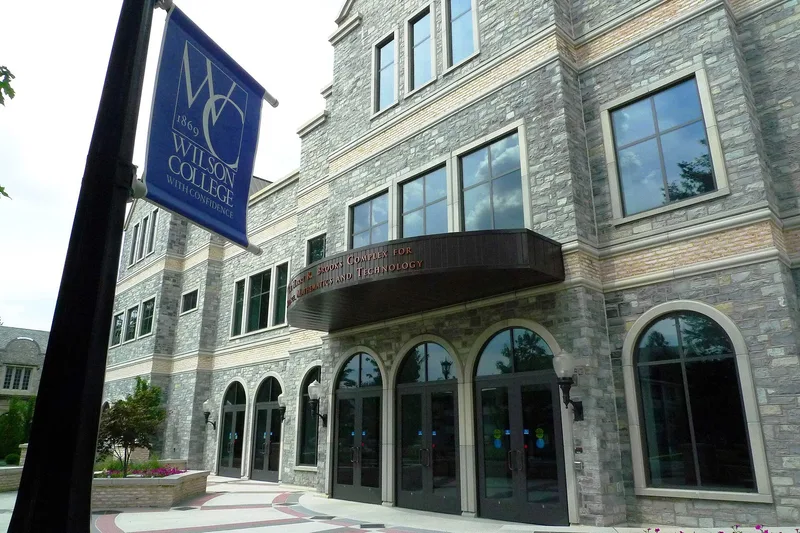
Wilson College occupies about 55 acres at the north end of Chambersburg, between U.S. Route 11 and the Conococheague Creek, and was chartered in 1869 after the college opened in 1870 as a women's liberal arts school. Its buildings are mostly stone and brick, built largely between 1900 and 1930 in Jacobethan, Collegiate Gothic and Colonial Revival styles, and arranged in an arc around a central green. Norland Hall, built in 1865 for Col. Alexander K. McClure after Confederate troops burned his earlier house, is a Second Empire residence with a mansard roof and remains highly intact inside. Founded through a gift from Sarah Wilson, the college was among the earliest women's colleges in the United States and one of the first in Pennsylvania to award a baccalaureate degree. Its alumnae funded major building campaigns from the 1890s onward, including Thomson Hall and the 1920s limestone halls. The district is considered significant for both its educational role and its architecture.
Machine-generated summary. This summary was generated by a language model from the official nomination document and has not been reviewed line by line by an editor. It may contain errors. Check the source document before relying on any detail. Source: nomination document (PDF) · catalog entry. Generated October 2026 (model claude-haiku-5-5, prompt v1.1-2026-10-29).
| Period of significance | 1865-1945 |
|---|---|
| Styles | Second Empire; Jacobethan Revival; Collegiate Gothic; Colonial Revival |
| Areas of significance | Architecture, Education |
| Acreage | 55 |
| Boundary source | NPS cultural-resource GIS polygon |
| Full listing page | Wilson College (property record) |
What listing means for this property
This is a historic district. Buildings within its boundary are either contributing (they add to the district's significance) or non-contributing. Owners of contributing income-producing buildings can claim the 20% federal rehabilitation tax credit; homeowners should look at state credits. National Register districts impose no design review by themselves; a local historic district ordinance, if one exists, does (the difference explained).
General information, not legal or tax advice. Rules change; confirm with your State Historic Preservation Office or a qualified adviser.