West Park Place

Why it's listed
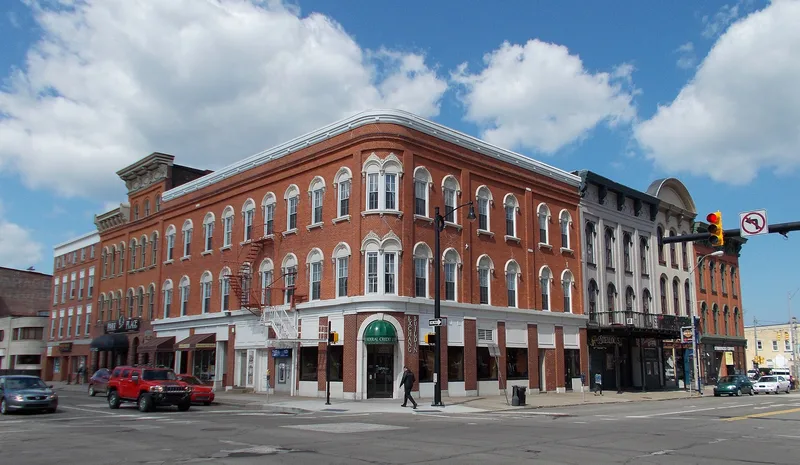
Built between 1857 and 1865 in the commercial heart of Erie, Pennsylvania, West Park Place is a cluster of three-story brick business blocks arranged around the central park, along North Park Row, Peach Street and State Street. The buildings followed a fire in the winter of 1857 that destroyed the wooden structures on the site. Most were designed by John Hill, whose facades use wide bracketed cornices, dentils, arched windows with masonry hoods, and pilasters dividing the fronts into window bays. The ground floors held shops and services, upper floors offices, and the third floors entertainment halls. Farrar Hall, opened in 1860 as a theater seating about 1,500, later became the Park Opera House, which hosted touring companies and performers. The district is regarded as Erie's most intact example of a 19th-century downtown business area, and its brick construction reflects the city's effort to reduce the risk of fire.
Machine-generated summary. This summary was generated by a language model from the official nomination document and has not been reviewed line by line by an editor. It may contain errors. Check the source document before relying on any detail. Source: nomination document (PDF) · catalog entry. Generated October 2026 (model claude-haiku-5-5, prompt v1.1-2026-10-29).
| Period of significance | 1857-1865 |
|---|---|
| Styles | Commercial Italianate |
| Areas of significance | Commerce, Architecture |
| Acreage | 2.3 |
| Boundary source | NPS cultural-resource GIS polygon |
| Full listing page | West Park Place (property record) |
What listing means for this property
This is a historic district. Buildings within its boundary are either contributing (they add to the district's significance) or non-contributing. Owners of contributing income-producing buildings can claim the 20% federal rehabilitation tax credit; homeowners should look at state credits. National Register districts impose no design review by themselves; a local historic district ordinance, if one exists, does (the difference explained).
General information, not legal or tax advice. Rules change; confirm with your State Historic Preservation Office or a qualified adviser.