Tyler, George F., Mansion

Why it's listed
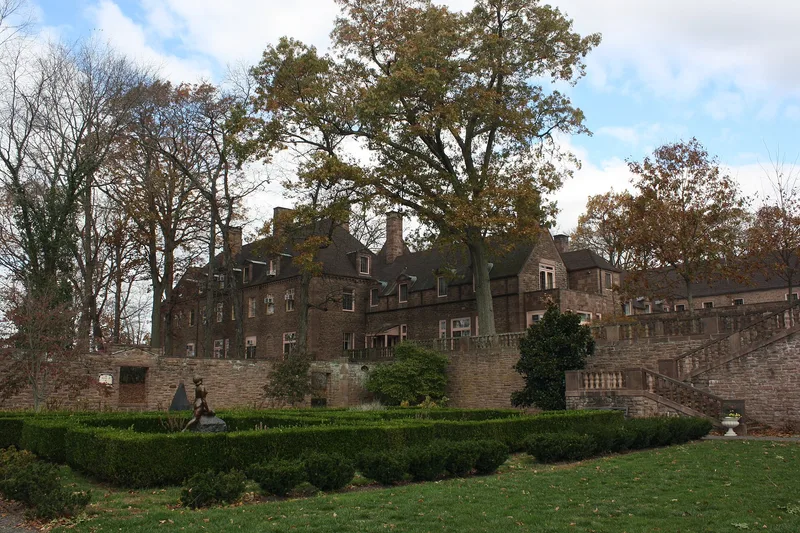
Built in brownstone near Newtown in Bucks County, the George F. Tyler Mansion was designed for George and Stella Elkins Tyler and constructed beginning in 1930 by the Philadelphia firm of Willing, Sims, and Talbutt. The French Norman house runs about three hundred feet end to end and contains some sixty rooms, with walls two feet thick, cork-lined interiors, copper gutters and specially made roof tiles. Its interiors include paneled reception rooms, Goya prints, antique frescoes and more than twenty fireplaces. The grounds include terraced formal gardens with fountains, an orangery and two bath houses. The mansion is regarded as the firm's largest and most expensive commission, and as the most ambitious private residence of its era in the county. Since 1965 it has served as part of the Bucks County Community College campus, and the exterior and most significant interior spaces remain largely intact.
Machine-generated summary. This summary was generated by a language model from the official nomination document and has not been reviewed line by line by an editor. It may contain errors. Check the source document before relying on any detail. Source: nomination document (PDF) · catalog entry. Generated October 2026 (model claude-haiku-5-5, prompt v1.1-2026-10-29).
| Period of significance | 1931 |
|---|---|
| Styles | French Norman |
| Areas of significance | Architecture |
| Acreage | 4 |
| Boundary source | NPS cultural-resource GIS polygon |
| Full listing page | Tyler, George F., Mansion (property record) |
What listing means for this property
This is a historic district. Buildings within its boundary are either contributing (they add to the district's significance) or non-contributing. Owners of contributing income-producing buildings can claim the 20% federal rehabilitation tax credit; homeowners should look at state credits. National Register districts impose no design review by themselves; a local historic district ordinance, if one exists, does (the difference explained).
General information, not legal or tax advice. Rules change; confirm with your State Historic Preservation Office or a qualified adviser.