Tuberculosis Hospital of Pittsburgh

The National Park Service has not published a boundary polygon for this district; the map shows the listed properties inside it and the district's reference point.
Why it's listed
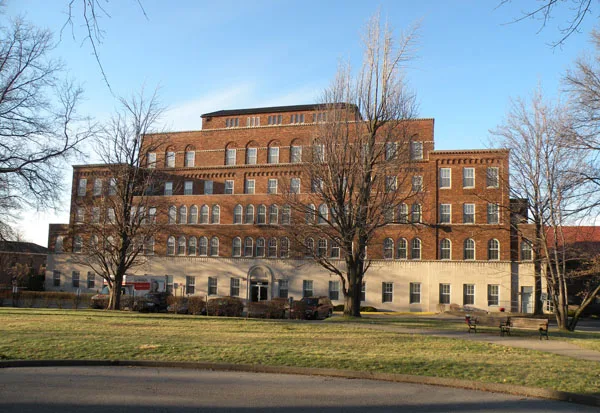
Eight brick buildings on a wooded hilltop above the Allegheny River in Pittsburgh's Hill District make up this former tuberculosis hospital, built by the Tuberculosis League of Pittsburgh between about 1909 and 1949. The layout reflects early twentieth-century treatment, which relied on rest, nutrition, fresh air and sunshine. The buildings are long and narrow, with central corridors, many windows and open porches for fresh-air therapy, and a broad lawn lies at the center of the complex. The main hospital building, completed in 1929 to the design of E. P. Mellon, has five stories, arcaded brickwork and a 150-bed capacity. The League also used the site to train University of Pittsburgh medical students and nurses. The complex is significant for its role in the local fight against tuberculosis, which was the leading cause of infectious death in Pittsburgh around 1900. Its surviving setting and window-rich interiors still convey that treatment.
Machine-generated summary. This summary was generated by a language model from the official nomination document and has not been reviewed line by line by an editor. It may contain errors. Check the source document before relying on any detail. Source: nomination document (PDF) · catalog entry. Generated October 2026 (model claude-haiku-5-5, prompt v1.1-2026-10-29).
| Period of significance | c. 1912-1940 |
|---|---|
| Styles | Italian Renaissance Revival; (Northern) Italian Romanesque Revival; Institutional Vernacular |
| Areas of significance | Health/Medicine |
| Acreage | 4.9 |
| Boundary source | not published |
| Full listing page | Tuberculosis Hospital of Pittsburgh (property record) |
What listing means for this property
This is a historic district. Buildings within its boundary are either contributing (they add to the district's significance) or non-contributing. Owners of contributing income-producing buildings can claim the 20% federal rehabilitation tax credit; homeowners should look at state credits. National Register districts impose no design review by themselves; a local historic district ordinance, if one exists, does (the difference explained).
Noted as vacant in the nomination. Nomination documents can be decades old; current status may differ. If you are considering buying an empty listed property, read the due-diligence checklist.
General information, not legal or tax advice. Rules change; confirm with your State Historic Preservation Office or a qualified adviser.