Teller Brothers-Reed Tobacco Historic District

The National Park Service has not published a boundary polygon for this district; the map shows the listed properties inside it and the district's reference point.
Why it's listed
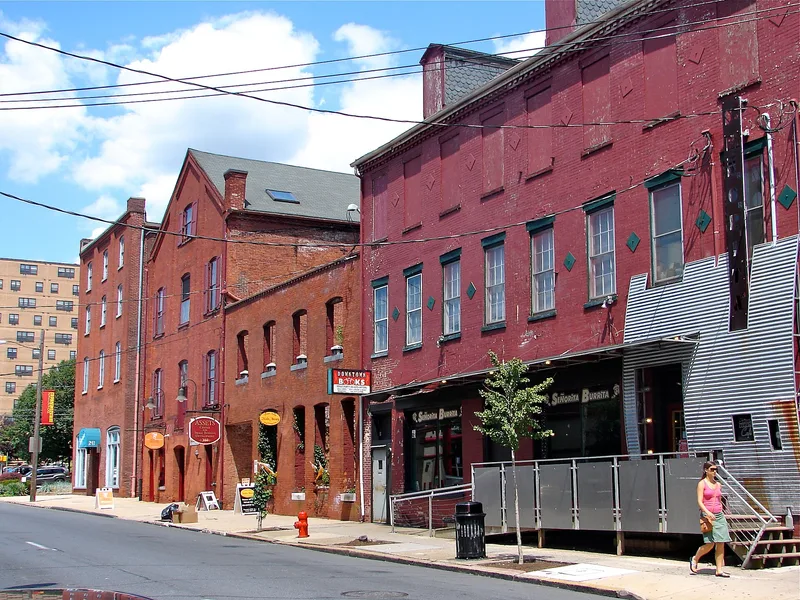
Five brick buildings and one former site on the east side of the 200 block of North Prince Street in Lancaster form a tobacco district built mostly between about 1865 and 1900. The three-and-one-half-story John F. Reed & Co. Cigar Factory, dating from about 1865, has a late-Federal appearance and seems to have begun as a double house before being expanded. The Teller Bros. warehouses, the South Building from about 1877 and the North Building from about 1885, were built for a Philadelphia leaf tobacco firm and show the shift from pitched to flat roofs on industrial buildings. The J. R. Bitner Tobacco Warehouse, from about 1880, combined storage with a box shop. A fire in 1984 destroyed the Lancaster Paint & Glass Co. front building and damaged the rear Lancaster Paint Works, which is included as a contributing building for its warehouse construction. The district's close ties to the adjacent railroad lines add to its significance.
Machine-generated summary. This summary was generated by a language model from the official nomination document and has not been reviewed line by line by an editor. It may contain errors. Check the source document before relying on any detail. Source: nomination document (PDF) · catalog entry. Generated October 2026 (model claude-haiku-5-5, prompt v1.1-2026-10-29).
| Period of significance | C. 1877-1920 |
|---|---|
| Styles | Late-Federal (John F. Reed & Co. Cigar Factory); other buildings described as warehouse architecture |
| Areas of significance | Industry, Architecture |
| Acreage | 1 |
| Boundary source | not published |
| Full listing page | Teller Brothers-Reed Tobacco Historic District (property record) |
What listing means for this property
This is a historic district. Buildings within its boundary are either contributing (they add to the district's significance) or non-contributing. Owners of contributing income-producing buildings can claim the 20% federal rehabilitation tax credit; homeowners should look at state credits. National Register districts impose no design review by themselves; a local historic district ordinance, if one exists, does (the difference explained).
General information, not legal or tax advice. Rules change; confirm with your State Historic Preservation Office or a qualified adviser.