Stouchsburg Historic District

Why it's listed
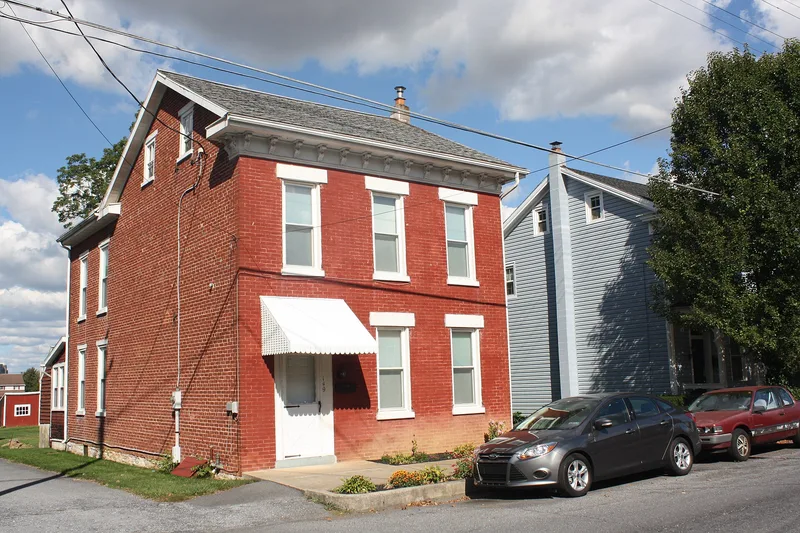
Stouchsburg is a linear village of closely built houses along one main street in Marion Township, Berks County, laid out in the 1820s on lots about 50 by 250 feet that run back to rear alleys. Most of its 97 major buildings date from the 19th century, with 19 log, 33 brick, 4 stone and 39 frame structures recorded, and about 150 outbuildings such as barns, summer kitchens, smokehouses and cisterns stand behind them. The village grew after the Berks and Dauphin Turnpike opened in 1817 and with the Union Canal trade after 1827, and it expanded again during the 1870s cigar industry. Its Peter Spycker House, dating from about 1750, is the oldest known building. Because growth largely ceased after the canal was abandoned in 1884, the village retains its 19th-century plan and building stock. It is regarded as a typical Pennsylvania German village of that era, with its layout and houses intact.
Machine-generated summary. This summary was generated by a language model from the official nomination document and has not been reviewed line by line by an editor. It may contain errors. Check the source document before relying on any detail. Source: nomination document (PDF) · catalog entry. Generated October 2026 (model claude-haiku-5-5, prompt v1.1-2026-10-29).
| Period of significance | 1750-1930 |
|---|---|
| Styles | Pennsylvania German vernacular; Georgian; Italianate; Victorian; Queen Anne |
| Areas of significance | Commerce, Transportation, Education, Architecture |
| Acreage | 47 |
| Boundary source | NPS cultural-resource GIS polygon |
| Full listing page | Stouchsburg Historic District (property record) |
What listing means for this property
This is a historic district. Buildings within its boundary are either contributing (they add to the district's significance) or non-contributing. Owners of contributing income-producing buildings can claim the 20% federal rehabilitation tax credit; homeowners should look at state credits. National Register districts impose no design review by themselves; a local historic district ordinance, if one exists, does (the difference explained).
General information, not legal or tax advice. Rules change; confirm with your State Historic Preservation Office or a qualified adviser.