Springtown Historic District

Why it's listed
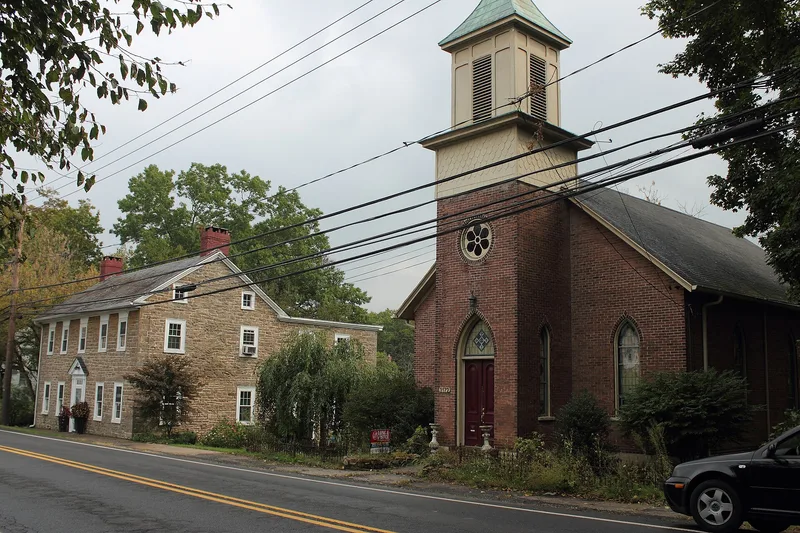
Springtown is a linear rural village along Main Street in Springfield Township, Bucks County, set on a limestone valley where springs feed Silver Creek and Cook's Creek. Settlement began in the 1730s around Stephen Twining's mill, and the surrounding roads made the village a commercial center by the late 18th century. Its earliest houses are two-and-a-half-story stone buildings, including Kooker's Tavern, with German and English building traditions visible side by side. Eight large barns, twenty wagon houses and several stone springhouses survive alongside the houses, hotels and stores. Commercial activity included a tannery, lime burning, coach and wheelwright shops, and a hotel that operated into the 20th century. The village is listed for its commercial and agricultural history and for the concentration of well-preserved early architecture in one continuous streetscape.
Machine-generated summary. This summary was generated by a language model from the official nomination document and has not been reviewed line by line by an editor. It may contain errors. Check the source document before relying on any detail. Source: nomination document (PDF) · catalog entry. Generated October 2026 (model claude-haiku-5-5, prompt v1.1-2026-10-29).
| Period of significance | 1736-1956 |
|---|---|
| Styles | Georgian; Federal; Italianate; Victorian Gothic; Queen Anne; Colonial Revival; Tudor Revival; Cape Cod; Bungalow |
| Areas of significance | Architecture, Commerce, Agriculture |
| Acreage | 161.5 |
| Boundary source | NPS cultural-resource GIS polygon |
| Full listing page | Springtown Historic District (property record) |
What listing means for this property
This is a historic district. Buildings within its boundary are either contributing (they add to the district's significance) or non-contributing. Owners of contributing income-producing buildings can claim the 20% federal rehabilitation tax credit; homeowners should look at state credits. National Register districts impose no design review by themselves; a local historic district ordinance, if one exists, does (the difference explained).
General information, not legal or tax advice. Rules change; confirm with your State Historic Preservation Office or a qualified adviser.