Shreiner Farm

Why it's listed
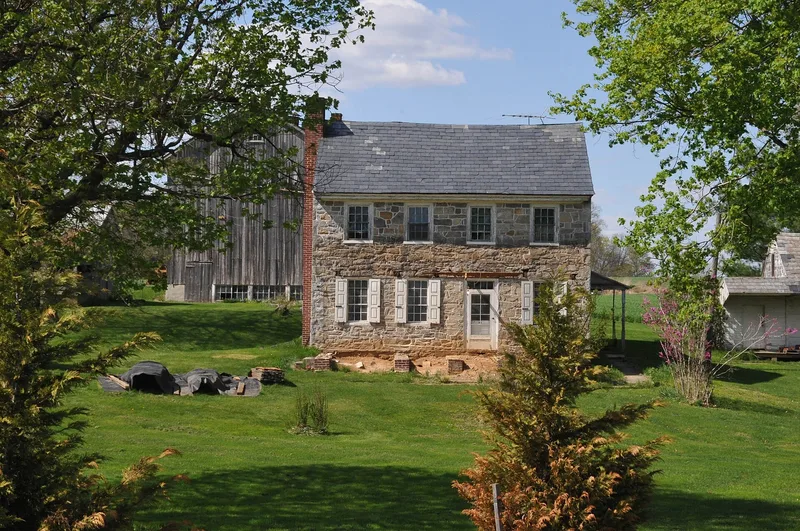
Along the north side of Oregon Pike in Manheim Township, Lancaster County, a working farmstead built largely in the early 1800s includes a two-and-a-half-story fieldstone farmhouse dated circa 1830, a fieldstone bank barn with a datestone reading 1828, a summer kitchen with a walk-in fireplace, a frame tobacco barn from around 1900, and three early twentieth-century frame sheds. The land was granted by William Penn to Hans Adam Schryner in 1743 and remained in the Shreiner family for generations. Henry Shreiner, born in 1804, farmed the property from 1827 to 1859 and later served for 43 years as a justice of the peace. The farm is regarded as a well-preserved example of typical early nineteenth-century Lancaster County farm construction. Its buildings still stand in an active farming setting of rotating corn, soy and produce fields, even as surrounding land has developed for housing. Its farmhouse and barn retain much of their original form and materials.
Machine-generated summary. This summary was generated by a language model from the official nomination document and has not been reviewed line by line by an editor. It may contain errors. Check the source document before relying on any detail. Source: nomination document (PDF) · catalog entry. Generated October 2026 (model claude-haiku-5-5, prompt v1.1-2026-10-29).
| Period of significance | 1743-1945 |
|---|---|
| Styles | Pennsylvania style farmhouse; Pennsylvania barn |
| Areas of significance | Architecture, Agriculture |
| Acreage | 52 |
| Boundary source | NPS cultural-resource GIS polygon |
| Full listing page | Shreiner Farm (property record) |
What listing means for this property
This is a historic district. Buildings within its boundary are either contributing (they add to the district's significance) or non-contributing. Owners of contributing income-producing buildings can claim the 20% federal rehabilitation tax credit; homeowners should look at state credits. National Register districts impose no design review by themselves; a local historic district ordinance, if one exists, does (the difference explained).
General information, not legal or tax advice. Rules change; confirm with your State Historic Preservation Office or a qualified adviser.