Schuylkill Navigation Canal, Oakes Reach Section

Why it's listed
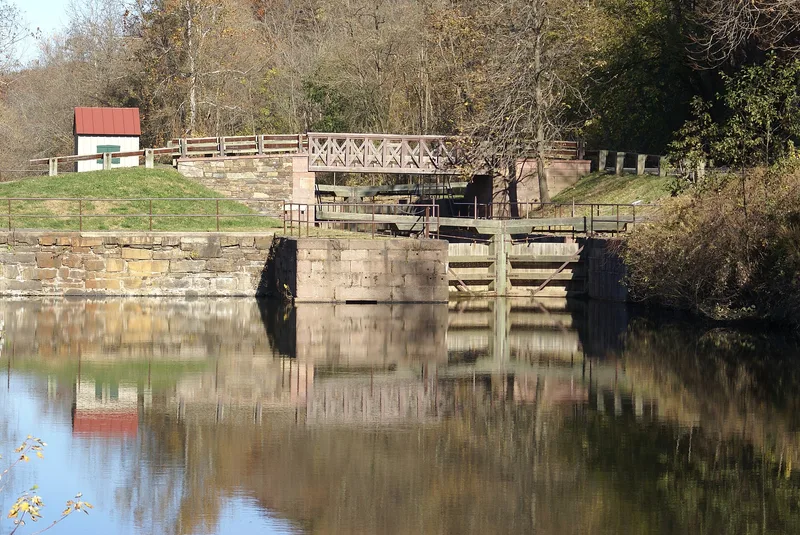
Watered canal section running about 5.1 miles between the Route 113 bridge near Black Rock Dam and Lock #61 on the Schuylkill River, with locks, a dam, lockhouses and a dry-dock site. Construction of the Schuylkill Navigation system began in 1816, and this section operated from 1824 to 1887 as part of a network that carried anthracite coal and merchandise to Philadelphia. The canal was widened to 60 feet in 1846, and Lock #60 dates to 1838-39, with its lockhouse dated 1839. Black Rock Dam, built in 1840, impounds a pool of about 95 acres. The section is considered significant for its role in moving raw materials and finished goods, and for supporting the growth of the Phoenix Iron Company and nearby villages such as Port Providence and Mont Clare. It is one of only two sections of the Schuylkill Canal still maintained with a controlled flow of river water, making it a rare surviving example of the system.
Machine-generated summary. This summary was generated by a language model from the official nomination document and has not been reviewed line by line by an editor. It may contain errors. Check the source document before relying on any detail. Source: nomination document (PDF) · catalog entry. Generated October 2026 (model claude-haiku-5-5, prompt v1.1-2026-10-29).
| Period of significance | 1824-1887 |
|---|---|
| Areas of significance | Transportation |
| Acreage | 155.3 |
| Boundary source | NPS cultural-resource GIS polygon |
| Full listing page | Schuylkill Navigation Canal, Oakes Reach Section (property record) |
What listing means for this property
This is a historic district. Buildings within its boundary are either contributing (they add to the district's significance) or non-contributing. Owners of contributing income-producing buildings can claim the 20% federal rehabilitation tax credit; homeowners should look at state credits. National Register districts impose no design review by themselves; a local historic district ordinance, if one exists, does (the difference explained).
General information, not legal or tax advice. Rules change; confirm with your State Historic Preservation Office or a qualified adviser.