Schenley Park

Why it's listed
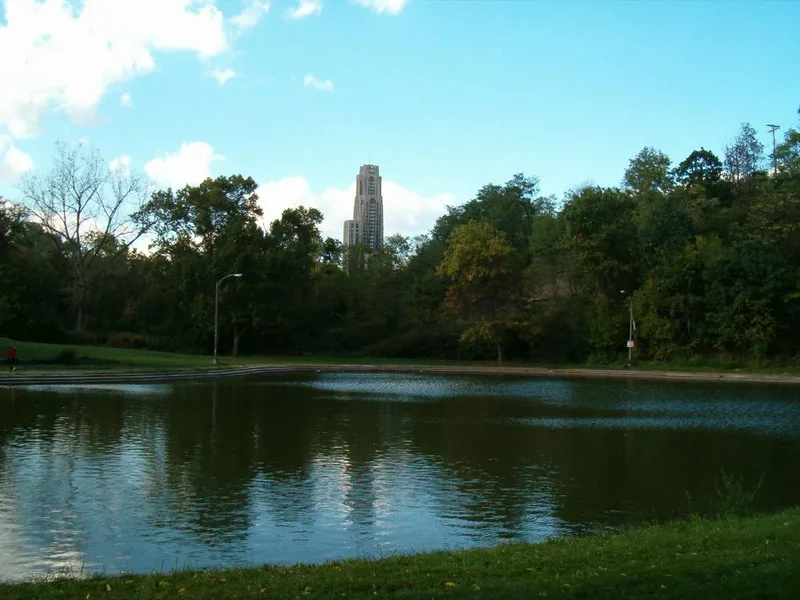
Schenley Park is a 456-acre public park in the Oakland and Squirrel Hill areas of Pittsburgh, laid out beginning in 1889 after heiress Mary Schenley gave land to the city. Public Works Director E. M. Bigelow led the planning, and the roads and trails were built between 1890 and 1895. The park's landscape was shaped to look natural through grading, tree and shrub planting, and curving roads, with Panther Hollow and Panther Hollow Lake at its center. Bridges crossing the ravines include steel and stone spans completed in 1897 and 1898, and tufa stone bridges built in 1908. Phipps Conservatory, completed in 1892 and 1893 with growing houses added in 1896, is the park's most notable building. Sculptures commemorate figures such as George Westinghouse and E. M. Bigelow. The district is valued for its picturesque design and as an example of the urban park movement of the late nineteenth century.
Machine-generated summary. This summary was generated by a language model from the official nomination document and has not been reviewed line by line by an editor. It may contain errors. Check the source document before relying on any detail. Source: nomination document (PDF) · catalog entry. Generated October 2026 (model claude-haiku-5-5, prompt v1.1-2026-10-29).
| Period of significance | 1889-1910 |
|---|---|
| Areas of significance | Community Planning and Development, Landscape Architecture, Art, Architecture |
| Acreage | 456 |
| Boundary source | NPS cultural-resource GIS polygon |
| Full listing page | Schenley Park (property record) |
What listing means for this property
This is a historic district. Buildings within its boundary are either contributing (they add to the district's significance) or non-contributing. Owners of contributing income-producing buildings can claim the 20% federal rehabilitation tax credit; homeowners should look at state credits. National Register districts impose no design review by themselves; a local historic district ordinance, if one exists, does (the difference explained).
General information, not legal or tax advice. Rules change; confirm with your State Historic Preservation Office or a qualified adviser.