Saxonburg Historic District

Why it's listed
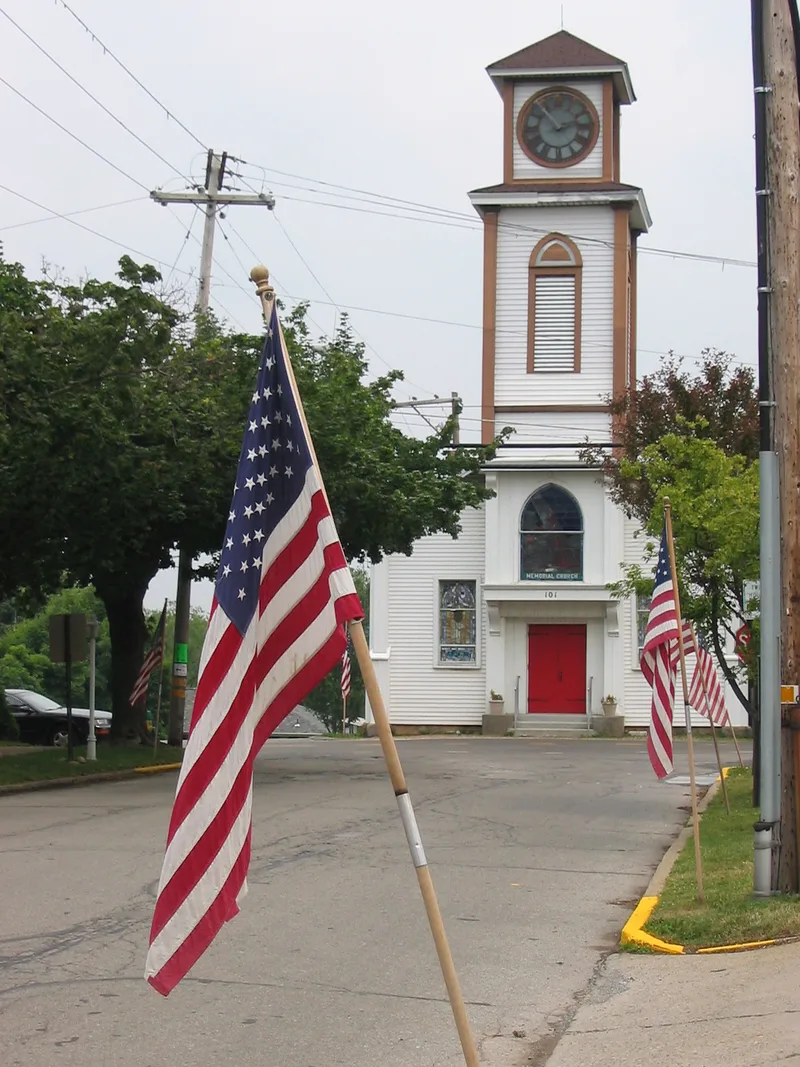
Saxonburg was planned in 1831 by John Roebling and a group of German emigrants on a grid of long, narrow lots fronting West Main Street. The district contains about sixty-six resources, most of them wood-frame houses and small commercial buildings set on stone foundations, with a few stone and brick churches. Its earliest houses used heavy timber framing with brick and straw infill, a Germanic method. Roebling worked on the community's layout and later developed twisted-wire cable here in 1841 while employed on the Pennsylvania Canal, a development that led to his suspension bridge work, including the Brooklyn Bridge. The district also holds examples of Greek Revival, Italianate, Eastlake and later revival styles, which together show the village's architectural development through the mid-twentieth century.
Machine-generated summary. This summary was generated by a language model from the official nomination document and has not been reviewed line by line by an editor. It may contain errors. Check the source document before relying on any detail. Source: nomination document (PDF) · catalog entry. Generated October 2026 (model claude-haiku-5-5, prompt v1.1-2026-10-29).
| Period of significance | 1831-1952 |
|---|---|
| Styles | Greek Revival, Italianate, Eastlake, Dutch Colonial Revival, Late Gothic Revival, Colonial Revival, Ranch |
| Areas of significance | Architecture, Engineering, Transportation |
| Acreage | 9 |
| Boundary source | NPS cultural-resource GIS polygon |
| Full listing page | Saxonburg Historic District (property record) |
What listing means for this property
This is a historic district. Buildings within its boundary are either contributing (they add to the district's significance) or non-contributing. Owners of contributing income-producing buildings can claim the 20% federal rehabilitation tax credit; homeowners should look at state credits. National Register districts impose no design review by themselves; a local historic district ordinance, if one exists, does (the difference explained).
General information, not legal or tax advice. Rules change; confirm with your State Historic Preservation Office or a qualified adviser.