Sauer Buildings Historic District

Why it's listed
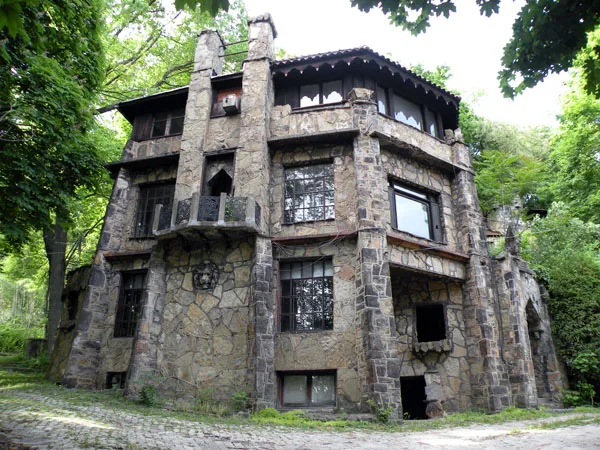
Set on a steep wooded hillside in Aspinwall, the Sauer Buildings are a group of houses, apartments, garages, walls and paths assembled by Frederick C. Sauer, a Pittsburgh-area architect and builder. Work began with his own house and carriage house of buff brick around 1900. From 1928 to 1930 he rebuilt a former chicken coop as the Heidelberg apartment building, and he continued adding structures until his death in 1942. The buildings use concrete and concrete block, faced with jagged stone quarried on site, and decorated with salvaged terra cotta including a lion mask and a relief of Benjamin Franklin. Each floor of the Heidelberg is reached from ground level because the building is set into the slope. The district is valued for its unusual, self-directed design, which departs from the conventional styles Sauer used in his public commissions. Its interiors, walls and landscape features together form a single unified image of the hillside.
Machine-generated summary. This summary was generated by a language model from the official nomination document and has not been reviewed line by line by an editor. It may contain errors. Check the source document before relying on any detail. Source: nomination document (PDF) · catalog entry. Generated October 2026 (model claude-haiku-5-5, prompt v1.1-2026-10-29).
| Period of significance | c. 1900; 1928-30 |
|---|---|
| Styles | Eccentric |
| Areas of significance | Landscape Architecture, Architecture |
| Acreage | 3 |
| Boundary source | NPS cultural-resource GIS polygon |
| Full listing page | Sauer Buildings Historic District (property record) |
What listing means for this property
This is a historic district. Buildings within its boundary are either contributing (they add to the district's significance) or non-contributing. Owners of contributing income-producing buildings can claim the 20% federal rehabilitation tax credit; homeowners should look at state credits. National Register districts impose no design review by themselves; a local historic district ordinance, if one exists, does (the difference explained).
General information, not legal or tax advice. Rules change; confirm with your State Historic Preservation Office or a qualified adviser.