Sansom Row

The National Park Service has not published a boundary polygon for this district; the map shows the listed properties inside it and the district's reference point.
Why it's listed
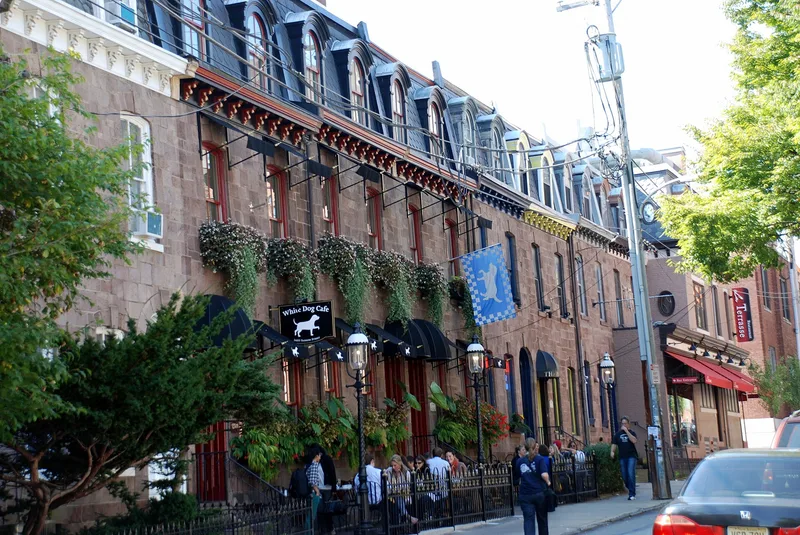
Eighteen row houses built between 1869 and 1871 in Philadelphia, near the University of Pennsylvania, make up Sansom Row. Sixteen of the houses are faced in rough-textured brownstone laid as random ashlar, and the westward end buildings are faced in common Philadelphia brick. The houses are built in mirror-image pairs sharing a party wall, with paired doorways and continuous bracketed cornices. Their Second Empire detailing includes round-arched doorways, segmentally arched windows with projecting keystones, heavy bracketed cornices, and mansards pierced by round-headed dormers. The row is regarded as significant for its architecture, especially the brownstone facades and imbricated mansard shingles, which distinguish it from the typical red brick rows of the city. It is also considered one of the last surviving examples of the post-Civil War building boom in the region. Residents over the years included Madame Elena Blavatsky, founder of the Theosophists, and stone carver John M. Gessler.
Machine-generated summary. This summary was generated by a language model from the official nomination document and has not been reviewed line by line by an editor. It may contain errors. Check the source document before relying on any detail. Source: nomination document (PDF) · catalog entry. Generated October 2026 (model claude-haiku-5-5, prompt v1.1-2026-10-29).
| Period of significance | 1869-1871 |
|---|---|
| Styles | Second Empire |
| Areas of significance | Architecture |
| Acreage | 0.4 |
| Boundary source | not published |
| Full listing page | Sansom Row (property record) |
What listing means for this property
This is a historic district. Buildings within its boundary are either contributing (they add to the district's significance) or non-contributing. Owners of contributing income-producing buildings can claim the 20% federal rehabilitation tax credit; homeowners should look at state credits. National Register districts impose no design review by themselves; a local historic district ordinance, if one exists, does (the difference explained).
General information, not legal or tax advice. Rules change; confirm with your State Historic Preservation Office or a qualified adviser.