Robesonia Furnace Historic District

Why it's listed
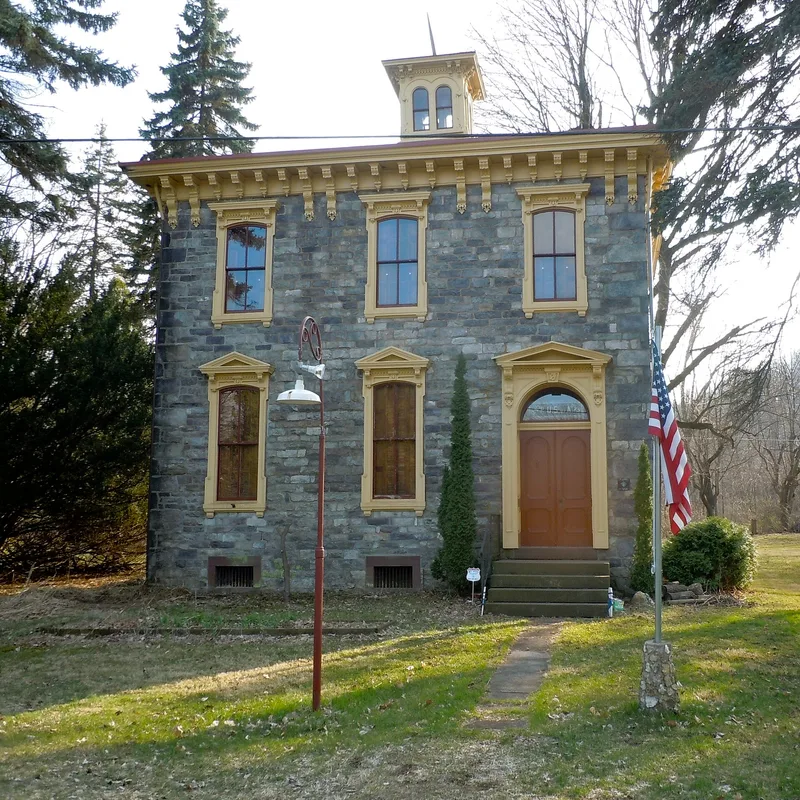
Robesonia Furnace Historic District occupies the southern part of Robesonia borough in Berks County, along Furnace Creek. It developed around an iron plantation whose first furnace on the site was established in 1794 by George Ege, who later built a Georgian stone mansion there in 1807. The district's surviving buildings are mainly residential, ranging from high-style houses to vernacular worker's housing built in stone, frame, log and slag block between about 1800 and 1915. The Second Empire Taylor Mansion, the Italianate furnace office and the Georgian ironmaster's mansion stand out among them. Robesonia's ironworks were the centre of production for the Robesonia pig iron, and the company was dismantled in 1927 after Bethlehem Steel acquired the Cornwall ore mines. Its stone foundations, retaining walls and scattered pigs remain on the site, and the district is considered important for both its community history and its archaeological remains.
Machine-generated summary. This summary was generated by a language model from the official nomination document and has not been reviewed line by line by an editor. It may contain errors. Check the source document before relying on any detail. Source: nomination document (PDF) · catalog entry. Generated October 2026 (model claude-haiku-5-5, prompt v1.1-2026-10-29).
| Period of significance | 1800-1927 |
|---|---|
| Styles | Georgian; Second Empire; Italianate; vernacular |
| Areas of significance | Industry, Community Planning and Development, Historic - Non-Aboriginal, Architecture |
| Acreage | 70 |
| Boundary source | NPS cultural-resource GIS polygon |
| Full listing page | Robesonia Furnace Historic District (property record) |
What listing means for this property
This is a historic district. Buildings within its boundary are either contributing (they add to the district's significance) or non-contributing. Owners of contributing income-producing buildings can claim the 20% federal rehabilitation tax credit; homeowners should look at state credits. National Register districts impose no design review by themselves; a local historic district ordinance, if one exists, does (the difference explained).
General information, not legal or tax advice. Rules change; confirm with your State Historic Preservation Office or a qualified adviser.