Rieser-Shoemaker Farm

Why it's listed
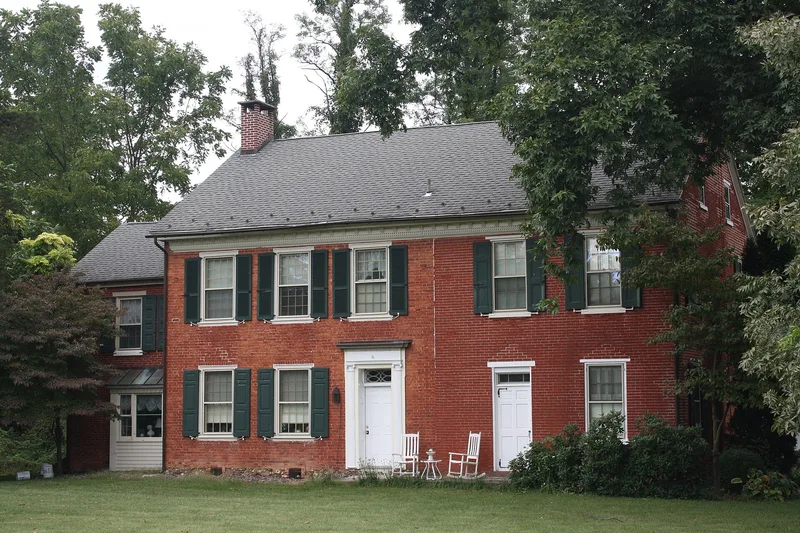
Built in the early 1800s in Bern Township near Leesport, the Rieser-Shoemaker Farm is a 137-acre working farm with a Federal-style brick farmhouse begun around 1820, a stone bank barn of about the same date, a group of brick, stone and frame outbuildings built between about 1820 and 1930, and a stone-walled spring. The farmhouse has Flemish bond brickwork and an Ionic-pilastered doorway, and an addition of about 1850 was later made into a separate apartment. The barn retains dirt floors, wooden stalls and troughs from its early use, and was not altered to meet dairy codes. The land was granted to Henry Rieser in 1725 under a Penn patent, and the Rieser family held it for roughly 175 years. It is listed for its agricultural continuity and for its well-preserved farm complex, which the nomination describes as representative of Berks County's diversified family farms.
Machine-generated summary. This summary was generated by a language model from the official nomination document and has not been reviewed line by line by an editor. It may contain errors. Check the source document before relying on any detail. Source: nomination document (PDF) · catalog entry. Generated October 2026 (model claude-haiku-5-5, prompt v1.1-2026-10-29).
| Period of significance | ca. 1820-1940 |
|---|---|
| Styles | Federal |
| Areas of significance | Agriculture, Architecture |
| Acreage | 137 |
| Boundary source | NPS cultural-resource GIS polygon |
| Full listing page | Rieser-Shoemaker Farm (property record) |
What listing means for this property
This is a historic district. Buildings within its boundary are either contributing (they add to the district's significance) or non-contributing. Owners of contributing income-producing buildings can claim the 20% federal rehabilitation tax credit; homeowners should look at state credits. National Register districts impose no design review by themselves; a local historic district ordinance, if one exists, does (the difference explained).
General information, not legal or tax advice. Rules change; confirm with your State Historic Preservation Office or a qualified adviser.