Rice's Landing Historic District
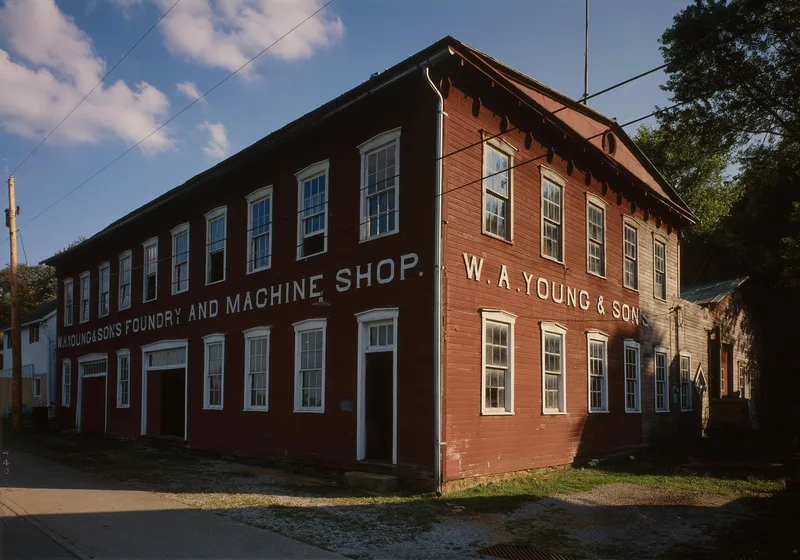

Why it's listed
Rice's Landing occupies a narrow river terrace, steep hillslope and upland ridgetop beside the Monongahela River in northeastern Greene County. Its vernacular buildings, mostly one and two stories, date from the Mid-Victorian to Craftsman periods. The town was founded in 1780 by John Rice, and after canalization brought Lock #6 in 1856, it served as a shipping point for goods bound for much of northeastern Greene County. Industrial sites include the W. A. Young Machine Shop, a preserved river-side plant whose foundry was added during the coal boom, and the Excelsior Pottery, where Isaac Hewitt, Jr. produced salt-glazed stoneware in the early 1870s. The Dilworth deep shaft mine, opened by the 1900s, shipped coal directly into barges, and its fan house survives. The district was listed for its well-preserved river port and coal-era character and for its cohesive architecture, which the nomination compares favorably with other Upper Monongahela towns that lost integrity to floods and later development.
Machine-generated summary. This summary was generated by a language model from the official nomination document and has not been reviewed line by line by an editor. It may contain errors. Check the source document before relying on any detail. Source: nomination document (PDF) · catalog entry. Generated October 2026 (model claude-haiku-5-5, prompt v1.1-2026-10-29).
| Period of significance | 1854 - 1930 |
|---|---|
| Styles | Other/Victorian Vernacular; Bungalow; Colonial Revival |
| Areas of significance | Industry, Historic - Non-Aboriginal, Transportation, Architecture |
| Acreage | 81 |
| Boundary source | NPS cultural-resource GIS polygon |
| Full listing page | Rice's Landing Historic District (property record) |
What listing means for this property
This is a historic district. Buildings within its boundary are either contributing (they add to the district's significance) or non-contributing. Owners of contributing income-producing buildings can claim the 20% federal rehabilitation tax credit; homeowners should look at state credits. National Register districts impose no design review by themselves; a local historic district ordinance, if one exists, does (the difference explained).
General information, not legal or tax advice. Rules change; confirm with your State Historic Preservation Office or a qualified adviser.