Pennsylvania Institute for the Deaf and Dumb

Why it's listed
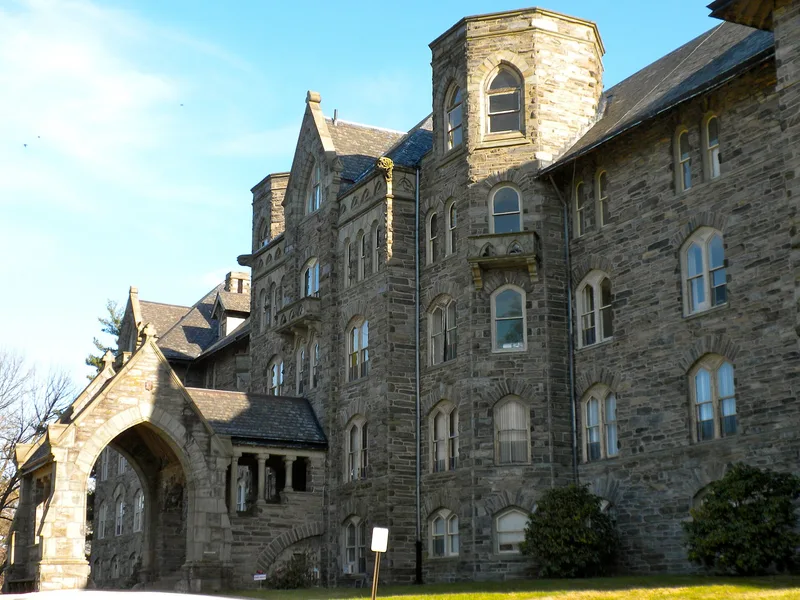
Set on a hilly site of about sixty acres in Mount Airy, Philadelphia, this campus was laid out in the 1890s by the Wilson Brothers, a firm of architects, engineers and planners. The buildings follow a pavilion plan arranged for light and air, and they are built of rough Wissahickon Schist. The central dormitory halls, Cresheim, Wingohocking and Wissinoming, each contain about 80,000 square feet and were designed for the school's primary, intermediate and advanced departments. The power house, with its Flemish gables, octagonal brick chimney and iron truss-roofed interior, served the school's industrial arts classes. Morris Hall and Gilpin Hall, by Cope and Stewardson and their successors Stewardson and Page, show the shift toward collegiate Gothic and later pastoral styles. The campus is listed for its intact late Victorian ensemble and its role in deaf education. The school was founded in 1820 and was among the earliest such institutions in the country.
Machine-generated summary. This summary was generated by a language model from the official nomination document and has not been reviewed line by line by an editor. It may contain errors. Check the source document before relying on any detail. Source: nomination document (PDF) · catalog entry. Generated October 2026 (model claude-haiku-5-5, prompt v1.1-2026-10-29).
| Period of significance | 1900- |
|---|---|
| Styles | Victorian; medieval-derived Gothic; Colonial Revival |
| Areas of significance | Education, Architecture, Social History |
| Acreage | 60 |
| Boundary source | NPS cultural-resource GIS polygon |
| Full listing page | Pennsylvania Institute for the Deaf and Dumb (property record) |
What listing means for this property
This is a historic district. Buildings within its boundary are either contributing (they add to the district's significance) or non-contributing. Owners of contributing income-producing buildings can claim the 20% federal rehabilitation tax credit; homeowners should look at state credits. National Register districts impose no design review by themselves; a local historic district ordinance, if one exists, does (the difference explained).
General information, not legal or tax advice. Rules change; confirm with your State Historic Preservation Office or a qualified adviser.