Penn-Liberty Historic District

Why it's listed
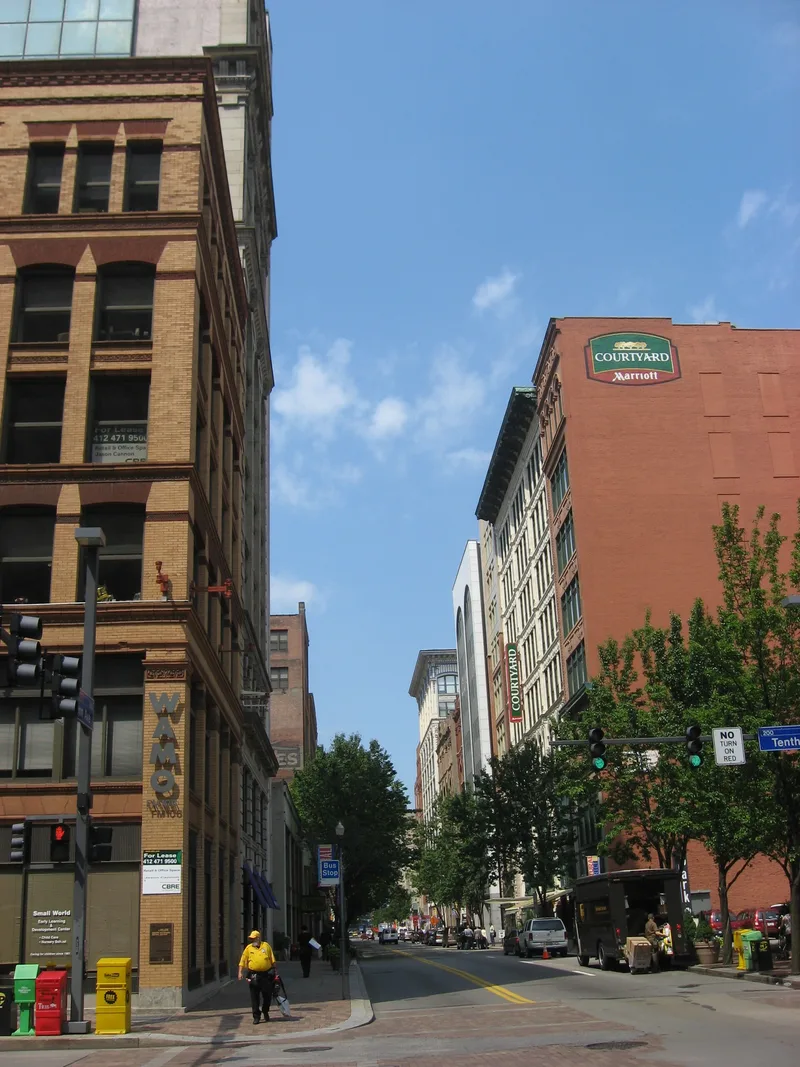
Penn-Liberty is a cluster of four- to ten-story loft and commercial buildings in downtown Pittsburgh, most dating from the late 1800s and early 1900s, arranged between Penn and Liberty avenues from Seventh to Tenth streets. Its buildings range from Italianate cast iron fronts of the 1870s and Queen Anne brick and stone blocks of 1884 and 1886 to Richardsonian Romanesque work by Charles Bickel from 1891 and 1892 and classical designs such as the Bingham Building of 1905. Rear alleys such as Exchange Way and Garrison Place gave service access to nearly every building. The district reflects Pittsburgh's rise as a distribution center served by rivers and railroads after the Civil War, when the city handled a large share of national freight. Most of the buildings survive with a high degree of integrity despite altered street-level shopfronts, and the district marks the downtown's shift toward specialized retail zones at the end of the century.
Machine-generated summary. This summary was generated by a language model from the official nomination document and has not been reviewed line by line by an editor. It may contain errors. Check the source document before relying on any detail. Source: nomination document (PDF) · catalog entry. Generated October 2026 (model claude-haiku-5-5, prompt v1.1-2026-10-29).
| Period of significance | 1870-1930 |
|---|---|
| Areas of significance | Commerce, Architecture |
| Acreage | 12 |
| Boundary source | NPS cultural-resource GIS polygon |
| Full listing page | Penn-Liberty Historic District (property record) |
What listing means for this property
This is a historic district. Buildings within its boundary are either contributing (they add to the district's significance) or non-contributing. Owners of contributing income-producing buildings can claim the 20% federal rehabilitation tax credit; homeowners should look at state credits. National Register districts impose no design review by themselves; a local historic district ordinance, if one exists, does (the difference explained).
General information, not legal or tax advice. Rules change; confirm with your State Historic Preservation Office or a qualified adviser.