Pembroke Village Historic District

Why it's listed
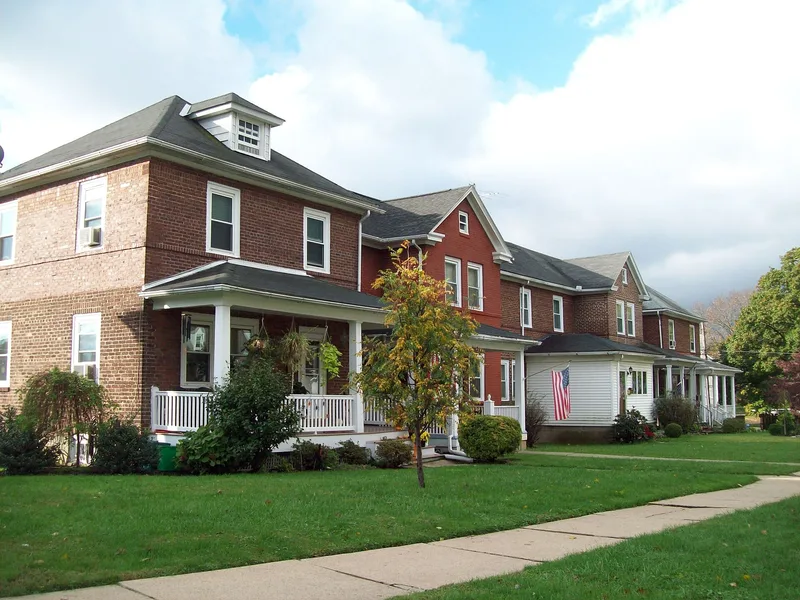
Pembroke Village is a planned residential district of brick dwellings on curved streets in northeast Bethlehem, Pennsylvania. Begun in 1918, it was laid out by the United States Housing Corporation to house workers at the Bethlehem Steel plant during World War I. The architect Milton Bennett Medary designed its houses, which feature Colonial Revival details such as six-over-six windows, brick lock courses and belt courses. Planners arranged rows of houses in concentric circles around a planned hub of stores, though the full 170-acre scheme was never completed and only about one-eighth was built before the war ended. The contractor ended work in December 1918, and the partly finished houses were sold in July 1919 with complete plans for completion. Most houses still follow those plans. The district is considered a well-preserved example of USHC community planning in Pennsylvania, one of only five of its twelve proposed projects built according to the original plans.
Machine-generated summary. This summary was generated by a language model from the official nomination document and has not been reviewed line by line by an editor. It may contain errors. Check the source document before relying on any detail. Source: nomination document (PDF) · catalog entry. Generated October 2026 (model claude-haiku-5-5, prompt v1.1-2026-10-29).
| Period of significance | 1918-1920 |
|---|---|
| Styles | Colonial Revival |
| Areas of significance | Community Planning and Development |
| Acreage | 21 |
| Boundary source | NPS cultural-resource GIS polygon |
| Full listing page | Pembroke Village Historic District (property record) |
What listing means for this property
This is a historic district. Buildings within its boundary are either contributing (they add to the district's significance) or non-contributing. Owners of contributing income-producing buildings can claim the 20% federal rehabilitation tax credit; homeowners should look at state credits. National Register districts impose no design review by themselves; a local historic district ordinance, if one exists, does (the difference explained).
General information, not legal or tax advice. Rules change; confirm with your State Historic Preservation Office or a qualified adviser.