North Hill Historic District

Why it's listed
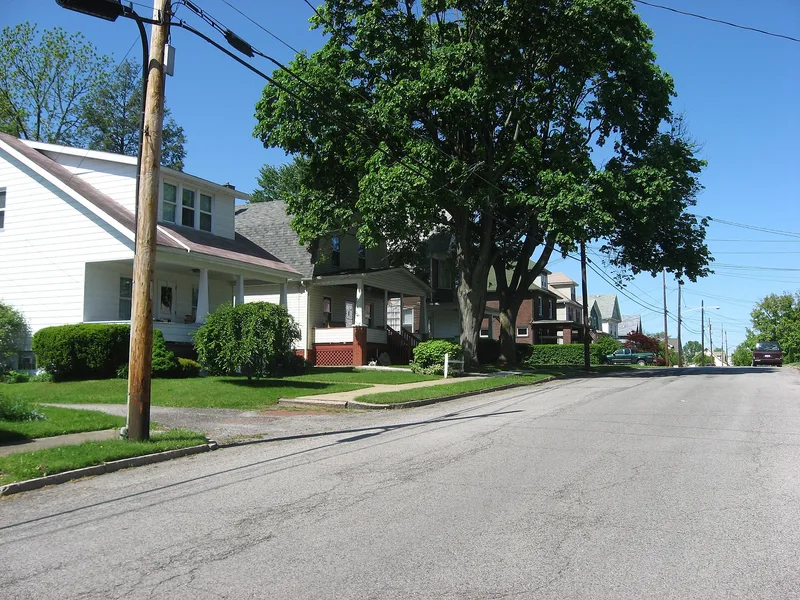
Residential neighborhood on a steep bluff above downtown New Castle, containing 1,888 buildings and one concrete bridge, most built between 1890 and 1930. Its houses were built largely for managers and executives of the city's iron, steel and tin industries, and the larger homes include brick and stone mansions with detailed ornamentation. The district is regarded as the best surviving reflection of New Castle's industrial origins, since the mills and factories that drove the local economy were largely removed in the 1980s and 1990s. Its architecture includes Queen Anne, Colonial Revival, Neoclassical and Craftsman styles, and the district contains 1,729 contributing resources. Major residences include the Second Empire house at 315 N. Mercer Street and the Colonial Revival mansion at 316 Rhodes Place, built for Edward and Mary Elizabeth King about 1903. Neshannock Heights, a speculative subdivision platted in 1897, shows the middle-class housing that developed on the upper hill.
Machine-generated summary. This summary was generated by a language model from the official nomination document and has not been reviewed line by line by an editor. It may contain errors. Check the source document before relying on any detail. Source: nomination document (PDF) · catalog entry. Generated October 2026 (model claude-haiku-5-5, prompt v1.1-2026-10-29).
| Period of significance | ca. 1870-1949 |
|---|---|
| Styles | Late 19th and Early 20th Century American Movements, Late Victorian, Late 19th and 20th Century Revivals |
| Areas of significance | Industry, Architecture |
| Acreage | 450 |
| Boundary source | NPS cultural-resource GIS polygon |
| Full listing page | North Hill Historic District (property record) |
What listing means for this property
This is a historic district. Buildings within its boundary are either contributing (they add to the district's significance) or non-contributing. Owners of contributing income-producing buildings can claim the 20% federal rehabilitation tax credit; homeowners should look at state credits. National Register districts impose no design review by themselves; a local historic district ordinance, if one exists, does (the difference explained).
General information, not legal or tax advice. Rules change; confirm with your State Historic Preservation Office or a qualified adviser.