North Charlotte Street Historic District

The National Park Service has not published a boundary polygon for this district; the map shows the listed properties inside it and the district's reference point.
Why it's listed
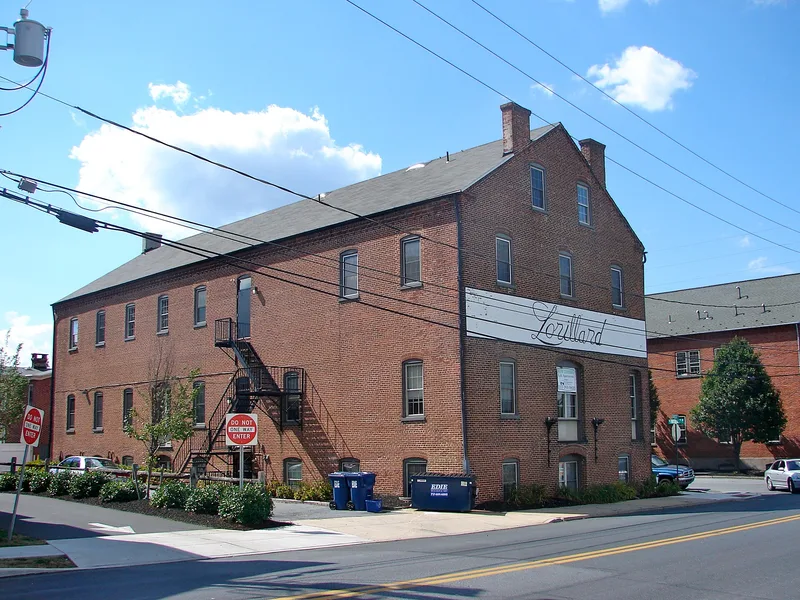
Ten brick industrial buildings line the west side of North Charlotte Street in Lancaster City, between Harrisburg Pike and West James Street, built between about 1876 and about 1920. John DeHaven erected the first six, tobacco warehouses laid in common bond brick with segmental-arched windows and original shutters on several. C.G. Schubert built the warehouse at 502 North Charlotte Street around 1880; its upper two floors were added around 1920 by the General Cigar Company. Henry Martin, who purchased much of the block in 1885, later expanded the Martin Brick Machine Company into adjoining buildings, including an erecting shop at 417 West Frederick Street with a facade dating from 1906. The buildings at 600 A and 417 West Frederick Street have the most ornate entrances because they housed offices. The district is significant for its link to tobacco, Lancaster City's leading industry in the late nineteenth and early twentieth centuries, and for its well-preserved group of warehouses that represents the industrial architecture of the period. Most buildings retain their original character, with few major changes.
Machine-generated summary. This summary was generated by a language model from the official nomination document and has not been reviewed line by line by an editor. It may contain errors. Check the source document before relying on any detail. Source: nomination document (PDF) · catalog entry. Generated October 2026 (model claude-haiku-5-5, prompt v1.1-2026-10-29).
| Period of significance | 1876-1939 |
|---|---|
| Styles | Colonial Revival |
| Areas of significance | Engineering, Architecture |
| Acreage | 2.8 |
| Boundary source | not published |
| Full listing page | North Charlotte Street Historic District (property record) |
What listing means for this property
This is a historic district. Buildings within its boundary are either contributing (they add to the district's significance) or non-contributing. Owners of contributing income-producing buildings can claim the 20% federal rehabilitation tax credit; homeowners should look at state credits. National Register districts impose no design review by themselves; a local historic district ordinance, if one exists, does (the difference explained).
General information, not legal or tax advice. Rules change; confirm with your State Historic Preservation Office or a qualified adviser.